Showing posts with label Environmental. Show all posts

Monday, June 6, 2011

Catholics & the Environment

• One must take into account the nature of each being and of its mutual connection in an ordered system,which is precisely the ‘Cosmos’.   On Social Concern (Solicitudo Rei Socialis) 1988, No. 34

• The image of the creator must shine forth ever more clearly, not only in his creature man, but in all of his creation in nature.   Pope Paul VI to the Council of the World Wildlife Fund, 1969

• Pope John Paul II invited some 4,000 people gathered in the rain to praise God and see the imprint of His love in the beauty of creation. He called the beauty of creation the first book that God has entrusted to the mind and heart of man. The beauty of nature impels the soul to recall God’s goodness, (the Pope) told the crowd that gathered to pray the angelus with him. Pope links beauty of creation to God’s love, Angelus Address given in the Italian Alps, 15 July 2001


• Faced with the widespread destruction of the environment, people everywhere are coming to understand that we cannot continue to use the goods of the Earth as we have in the past.

The public in general as well as political leaders are concerned about this problem, and experts from a wide range of disciplines are studying its causes. Moreover, a new ecological awareness is beginning to emerge which, rather than being downplayed, ought to be encouraged to develop into concrete programs and initiatives  Introduction to the Message of His Holiness Pope John Paul II for the celebration of the World Day of Peace, 1 January 1990


• The ecological crisis is a moral issue... Respect for life and for the dignity of the human person extends also to the rest of creation... we cannot interfere in one area of the ecosystem without paying due attention both to the consequences of such interference in other areas and to the well-being of future generations.   Pope John Paul II, 1990
_______________________________________________________________________


God made man the steward of creation
In the hymn of praise proclaimed . . . (Ps 148:1-5), the Psalmist summons all creatures, calling them by name. Angels, sun, moon, stars and heavens appear on high; twenty-two things move upon the Earth, as many as the letters of the Hebrew alphabet, in order to give an impression of fullness and totality.

The believer, in a sense, is “the shepherd of being”, that is, the one who leads all beings to God, inviting them to sing an “alleluia” of praise. The Psalm brings us into a sort of cosmic church whose apse is the heavens and whose aisles are the regions of the world, in which the choir of God's creatures sings his praise. GENERAL AUDIENCE  Pope John Paul II, Wednesday 17 January 2001
In this rediscovered harmony with nature and with one another, men and women are once again walking in the garden of creation, seeking to make the goods of the Earth available to all and not just to a privileged few, as the biblical jubilee suggests (cf. Lv 25:8-13, 23).

Among those marvels we find the Creator’s voice, transmitted by heaven and Earth, by night and day: a language “with no speech nor words; whose voice is not heard” and which can cross all boundaries (cf. Ps 19[18]:2-5).

___________________________________________________________________


The Book of Wisdom, echoed by Paul, celebrates God’s presence in the world, recalling that “from the greatness and beauty of created things comes a corresponding perception of their Creator” (Wis 13:5; cf. Rom 1:20). This is also praised in the Jewish tradition of the Hasidim: “Where I wander – You! Where I ponder – You!... In every trend, at every end, only You, You again, always You!” (M Buber, Tales of the Hasidim [Italian ed., Milan 1979, p 256]).    Pope John Paul II, 2001

Monday, May 17, 2010

Inventor of Birth Controll Pill Condemns It

Sourced below . . . Please note that bolding is my emphasis.
Eighty five year old Carl Djerassi the Austrian chemist who helped invent the contraceptive pill now says that his co-creation has led to a "demographic catastrophe." 

In an article published by the Vatican this week, the head of the world's Catholic doctors broadened the attack on the pill, claiming it had also brought "devastating ecological effects" by releasing into the environment "tonnes of hormones" that had impaired male fertility, The Taiwan Times says.
The assault began with a personal commentary in the Austrian newspaper Der Standard by Carl Djerassi. The Austrian chemist was one of three whose formulation of the synthetic progestogen Norethisterone marked a key step toward the earliest oral contraceptive pill.

Djerassi outlined the "horror scenario" that occurred because of the population imbalance, for which his invention was partly to blame. He said that in most of Europe there was now "no connection at all between sexuality and reproduction." He said: "This divide in Catholic Austria, a country which has on average 1.4 children per family, is now complete."

He described families who had decided against reproduction as "wanting to enjoy their schnitzels while leaving the rest of the world to get on with it.


The fall in the birth rate, he said, was an "epidemic" far worse, but given less attention, than obesity. Young Austrians, he said, were committing national suicide if they failed to procreate. And if it were not possible to reverse the population decline they would have to understand the necessity of an "intelligent immigration policy." 


The head of Austria's Catholics, Cardinal Christoph Schonborn, told an interviewer that the Vatican had forecast 40 years ago that the pill would lead to a dramatic fall in the birth rate in the west.

"Somebody above suspicion like Carl Djerassi ... is saying that each family has to produce three children to maintain population levels, but we're far away from that," he said.
Schonborn told Austrian TV that when he first read Pope Paul VI's 1968 encyclical condemning artificial contraception he viewed it negatively as a "cold shower." But he said he had altered his views as, over time, it had proved "prophetic."

Writing for the Vatican daily, L'Osservatore Romano, the president of the World Federation of Catholic Medical Associations, Jose Maria Simon, said research from his association also showed the pill "worked in many cases with a genuinely ... abortive effect."

Angelo Bonelli, of the Italian Green party, said it was the first he had heard of a link between the pill and environmental pollution. The worst of poisons were to be found in the water supply.
"It strikes me as idiosyncratic to be worried about this," he said.

Catholic News Agency details the claims by the president of the International Federation of Catholic Medical Associations, Dr Jose Maria Simon Castellvi, who outlined a series of scientific arguments said to confirm the prophetic nature of Pope Paul VI's encyclical on artificial contraception.
In an article published by the L'Osservatore Romano, the Spanish doctor pointed to the Federation's recent document commemorating the 40th anniversary of Humanae Vitae, which "irrefutably shows that the most widely used anti-ovulatory pill in the industrialised world, the one made with low doses of estrogen and progesterone, in many cases works with an anti-implantation effect; that is, abortifacient [effect], because it expels a small human embryo."

Castellvi also pointed out that "this anti-implantation effect is acknowledged in scientific literature, which shamelessly speaks of an embryo loss rate. Curiously, however, this information does not reach the public at large."

He also pointed to the "devastating ecological effects of the tons of hormones discarded into the environment each year. We have sufficient data to state that one of the causes of masculine infertility in the West is the environmental contamination caused by the products of the 'pill'." Castellvi noted as well that the International Agency for Research on Cancer reported in 2005 that the pill has carcinogenic effects. 

After explaining that the "natural methods of regulating fertility are the ones that are effective and that respect the nature of the person," Castellvi stated that "in celebrating the 60th anniversary of the Universal Declaration of the Rights of Man we can say that the contraceptive methods violate at least five important rights: the right to life, the right to health, the right to education, the right to information (its dissemination occurs to the detriment of information about natural methods) and the right of equality between the sexes (responsibility for contraceptive use almost always falls to the woman)."

SOURCES 
Catholic News   January 2009 
Catholic Church renews its attack on contraceptive pill (Taipei Times)
Medical Association points out prophetic nature of Humanae Vitae (Catholic News Agency)
Taylor Marshall - Canterbury Tales

Sunday, May 9, 2010

The Birthday of the Pill: 50 Years Later

by Vicki Thorn (Headline Bistro)  Please note: bolding is my emphasis.

From Time to Our Sunday Visitor, many articles are appearing in the media, both faith-based and secular, as society acknowledges and examines the impact of the birth control pill 50 years after its entrance on the U.S. scene.

Yet having read these and others, it seems there are more issues that aren’t being discussed.

For example, one would think that the environmental factor of artificial birth control would be of interest these days. The Pill and related contraceptives are contributing to waste water management issues around the world, since their hormonal content does not break down when excreted from the human body and entering our water system. We have a growing awareness today of the impact of certain plastics and other industrial chemicals on the body, as well as that of estrogens used in poultry and cattle feed. But estrogen is in our drinking water, too, and the role of contraceptives cannot be ignored.

“Estrogen and estrogen-like compounds enter water rivers, steams and reservoirs from many sources and remain there even after passing through water treatment plants,” reported one article, which went on to state that about 80 percent of 139 U.S. rivers have been found to be contaminated with trace estrogen compounds. “Naturally occurring estrogen compounds come from livestock urine and feces, and from human excretions which also contain contraceptives and hormone replacement medications.”

(For more information, the first book I encountered on this subject is called The Estrogen Effect: How Chemical Pollution is Threatening Our Survival, by Deborah Cadbury.)

Current writers are starting to explore the impact of exposure to such contaminants on the hormones of developing boys and girls. Leonard Sax, M.D., Ph.D., speaks about this in his books Boys Adrift: The Five Factors Driving the Growing Epidemic of Unmotivated Boys and Under Achieving Men and Girls on the Edge: The Four Factors Driving the New Crisis for Girls. His conclusions are dead on, and males especially seem to suffer: additional estrogen can lower testosterone in males, cause bones that do not mineralize properly, and result in genital malformations.

“Scientists are finding that exposure to environmental estrogens early in life, particularly in utero and in early infancy blunts or eliminates sex differences in behavior,” Dr. Sax writes in Boys Adrift.
There are many unanswered questions and outcomes that go far beyond the decision to use the Pill.
There is another outcome that needs to be considered. Some years ago in the book 13th Gen: Abort, Retry, Ignore, Fail? by Neil Howe, William Strauss, R.J. Matson and Ian Williams, the authors speak about an impact of contraception: we could suddenly control our fertility.

The arrival of children was no longer a spontaneous random event, and in the authors’ description, children moved from being “welcomed to wanted.” Our desire for children moved them from gift to possession. Because they were “planned,” we came to expect that they would fulfill our expectations. We wanted a boy and a girl, and we fantasized about the feisty football player and the delicate ballerina and the academic super star.

“Children are expected to provide a return for all the care, attention and money lavished on them,” said the authors of Lying-In: A History of Childbirth in America. “Children have become extensions of the parent’s selves, demonstrations of the parent’s genetic potential, economic expenditures, emotional self-sacrifice and childbearing ability.”

I remember magazine covers in the ‘90s depicting children with barcodes on their foreheads. The message? Children are the ultimate possession.

Yet on the flip side of this possessive mentality toward children was another phenomena: the “oops” child.
You’ve probably heard parents say, “This is John and this Mary. And this is Sam, our little oops!” The child hears this description and quickly concludes that they were a mistake, and this becomes their enduring identity.

Whenever I speak about this, people in the audience nod, because I have described their experience. They have lived with a deep existential wound that either drove them to become “super achievers,” as if to prove their parents wrong, or to write life off as one who was never meant to be here. One woman recently volunteered that her sister was the unplanned child in the family and that they call her “Boo Boo” to this day. She said she’d never thought of the damage that may have done to her.

Contraception and abortion mean we have absolute power to decide who comes into the world and who doesn’t. In the book Teenage Wasteland: Suburbia's Dead End Kids, author Donna Gaines observes that the Baby Boom generation – the last conceived before legalized abortion –“grew up understanding that one generation now had the legitimate right to annihilate another, up front.”
I would add that contraception is part of this mentality as well.
Who would think that a little pill could change so many things!

Wednesday, April 8, 2009

Natural Aphid Control

I believe being good stewards of what God has give us includes staying away from pesticides as much as possible.
Yes, pesticides do a great job killing bugs . . . . but pesticides keep killing. PESTICIDES DON'T KNOW WHEN TO STOP KILLING.
They get into our ground water, our air, our plants, our foods and our livestock. 
If you have roses you will love this info. If you have kids who like lady bugs you will love this info. If you like doing cool science projects with your kids you will like this information.

On a side note -- do you know where Lady Bugs got that nickname?
Adult lady beetles and their larvae are an excellent, non-chemical way to control aphids, Colorado potato beetles (egg stage) and other insect pests in your garden.
I highly recommend: Garden's Alive's Lady Bugs.  Here is their information:
Unlike the lady beetles sold by most other companies, ours are:
  • screened to remove patasitoid-infested beetles
  • ready to lay eggs the day you release them
  • hungry for pests!
Up to 20% of the lady beetles shipped by other companies are parasitized. So, not only will their lady beetles die shortly after you receive them, but they'll also release parasitoids that will kill any lady beetles previously in your garden.

Our Sta-Home lady beetles arrive healthy and ready to feed on pests! Females immediately lay eggs, which provide a second wave of pest-eaters within a week. And these larvae, which can't fly, have an even bigger appetite than the adults!
  • We precondition our lady beetles by feeding them a healthy diet to encourage egg laying. We also remove all parasitoid-infesting beetles so they don't attack your purchased or existing beetles.
  • One package of about 900 Sta-Home adults will produce more than 10,000 pest-eating larvae in your garden within 30 days! We ship at the proper time for your area or on the date you specify.
Note: We take great care to ensure that your insects arrive safely and in good health, ready for your garden. We normally ship them on Monday or Tuesday so they arrive before the weekend.
Pricing? Here it is. Go to Gardens Alive to order. This is just a cut and paste. :-)
1 pkg of Sta-HomeTM Lady Beetles (covers 1,000 sq ft)
1+ $13.95 Qty
1 of 3 pkgs of Sta-HomeTM Lady Beetles (1 package each of 3 shipments at 3-week intervals)
1+ $35.95 Qty

Cross-posted @ The Best Nest

Wednesday, January 7, 2009

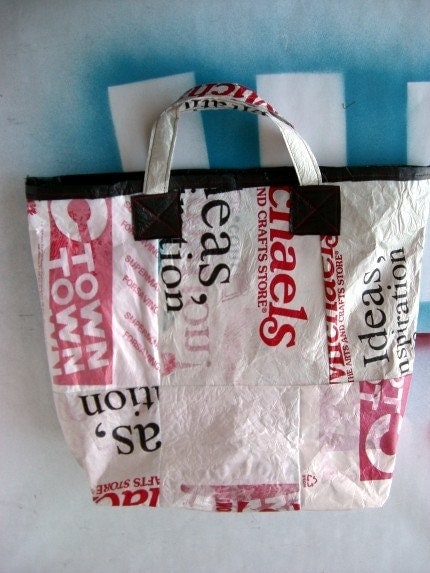
Recycle! Re-Use! Re-Create! Plastic Bag Creations


Recycle! Re-Use! Re-Create! (Cross posted @ The Best Nest)

The first step is to make plarn. Yep, you read that correctly, plarn.

Plarn is the term used to describe the yarn that can be made from recycling plastic bags. The link with the best description and pictures, in my opinion, is Making Plarn.

After the light bulb goes off and you are thinking, I get it! Try making one long strand of Plarn -- cool!


Working w/ Plarn - Hints and Tips!


Can't crochet? Learn how to fusing a few plastic grocery bags together to use in crafting. Plastic Bag Fusing

Monday, August 18, 2008

Bartering for Gas


I have made a decision about my next car.

It will be a diesel so I can convert the engine to one that runs on recycled vegetable oil.

Really!


I found the graphic to the right @ Danielle Bean's blog.


Wednesday, May 7, 2008

Fuel Options?

Clip_Summary_Image
Play_Now_Button
Click on the picture to watch this clip about fueling a car with vegetable oil. I apologize for the commercial at the begininng. The story is worth waiting through the silly commercial.
This information has been labeled quirky by some of my friends but I think "quirky" is not bad in many cases!

Cross posted at The Best Nest.

Saturday, March 1, 2008

Butterflies - In Small Things God is Revealed

I just read an article in The Wall Street Journal (of all places) that reminds me, "How great is our God!" The last line of the article is: "In small things considered is the world revealed."
As Paul Harvey would say, "And, here is the rest of the story."

In central Mexico, millions of monarch butterflies soon will stir and take flight. Their incredible annual migration offers us a rare insight into the molecular biology of time and travel. 

In the depth of winter, the monarchs can sense spring. This month, March, they will be returning north. It is not known what brings them back to the same places every year.

The article explained that the monarch's sense of time is crucial to its survival as it flies by the sun across open country. An innate chronometer enables feats of transcontinental navigation that, left to human calculation, might require the Global Positioning System and a computer-aided autopilot. Without a reliable clock, a traveler relying solely on a sun compass could easily get turned around, from morning to afternoon!

What scientists have learned actually transcends monarchs.

Scientists (names cited in the original article) studied the four brain cells that function as the monarch's timing device. Two brain cells drive the clockworks. The first is common to plants and other insects.

The second "stunned" the scientists because it so closely resembled one found only in humans and other mammals. It functions in the "butterfly clock" almost identically to the way it functions in our "human clock"!

I sometimes think of God watching us like we patiently and lovingly watch our children discover new wonders. He gave us this earth and all in it . . . . being good stewards should not be viewed as just a responsibility but an amazing gift!

Think of it!  In a single brain cell in a beautiful monarch butterfly God left us something wonderful to help us understand our own human bodies.

In Small Things Considered is God Revealed!

Wednesday, February 27, 2008

Ode to the Lost Trees


I think that I shall never see

A billboard lovely as a tree.

Indeed, unless the billboards fall

I'll never see a tree at all.
Ogden Nash

Monday, January 28, 2008

Ecological, Social, and Spiritual Consequences


Our personal consumer choices have ecological, social, and spiritual consequences. It is time to re-examine some of our deeply held notions that underlie our lifestyles.”

~David Suzuki
(
Canadian environmentalist, scientist and broadcaster)


Saturday, December 22, 2007

The Ecological Balance of Tomorrow

This a small part of:

MESSAGE OF HIS HOLINESS
POPE BENEDICT XVI
FOR THE CELEBRATION OF THE
WORLD DAY OF PEACE

1 JANUARY 2008

"Respecting the environment does not mean considering material or animal nature more important than man. Rather, it means not selfishly considering nature to be at the complete disposal of our own interests, for future generations also have the right to reap its benefits and to exhibit towards nature the same responsible freedom that we claim for ourselves. Nor must we overlook the poor, who are excluded in many cases from the goods of creation destined for all. Humanity today is rightly concerned about the ecological balance of tomorrow. It is important for assessments in this regard to be carried out prudently, in dialogue with experts and people of wisdom, uninhibited by ideological pressure to draw hasty conclusions, and above all with the aim of reaching agreement on a model of sustainable development capable of ensuring the well-being of all while respecting environmental balances."
I read and enjoyed Dust of the Time's reminder of some timeless proverbs we have all heard but may need to revisit! As she says, " good environmental science naturally adheres to proverbs I learned as a child."
  1. Cleanliness is next to godliness.
  2. Waste not, want not.
  3. Haste makes waste.
  4. An ounce of prevention is worth a pound of cure.
  5. A place for everything and everything in its place.
  6. A stitch in time saves nine.
  7. One man's junk is another man's treasure.
  8. One rotten apple spoils the whole barrel.
  9. An ounce of prevention is worth a pound of cure.
  10. Better safe than sorry
  11. Do unto others as you would have them do unto you.

Monday, November 12, 2007

Well then, it must be safe!


"Just because it is on a store shelf doesn't make it safe."

I say that at least once a week . . . let me elaborate on that, "Just because it is advertised does not make it safe."

This ad is a real vintage ad. What will our grandchildren be looking at and shaking their heads at in dismay?
Viagra, Tylenol, Aspartame, Lindane, Q-15, Chicken Pox vaccine, Lipitor, Hormones in milk, Formula for babies, Lysol . . .

Don't expect Uncle Sam to be watching your back! Remember that the U.S. government does not require manufacturers to list the ingredients on the label of products that are used for family, household or personal care -- Yes, that's right; they do not even have to tell us what is them.
AND -- products that KILL up to 50% of lab animals by inhalation, ingestion or absorption can still receive the federal regulatory label of "non-toxic."

Sunday, July 1, 2007

Respect for Human Life & Nature Linked

A consistent respect for human life, must extend to respect for all Creation.


The Church approaches the care and protection of the environment from the point of view of the human person. Men and women are created in the image and likeness of God. Fostering and protecting human life and dignity, from conception to natural death, lies at the heart of the Church's social teachings. We now realize that respect for human life and respect for nature are inextricably linked.

This is one of seven stated Themes of Ecological Responsibility


According to Pope John Paul II,

"Faced with the widespread destruction of the environment, people everywhere are coming to understand that we cannot continue to use the goods of the earth as we have in the past. The public in general as well as political leaders are concerned about this problem, and experts from a wide range of disciplines are studying its causes. Moreover, a new ECOLOGICAL AWARENESS is beginning to emerge which, rather than being downplayed, ought to be encouraged to develop into concrete programs and initiatives." *4

Shamefully, the reverse is also true: Our lack of respect for life extends also to the rest of Creation and is an underlying cause of social injustice and environmental destruction. The right to life precedes and underlies every other social and environmental issue or group of issues. The the womb is the most endangered human environment in the world today.
Long before the current ecological movement developed, saints taught respect for all of God's Creation.

St. Ignatius of Loyola said, "Man is created to praise, revere and serve God our Lord, and by this means to save his soul. The other things on the face of the earth are created for man to help him in attaining the end for which he is created. Hence, man is to make use of them in as far as they help him in the attainment of his end."

"The Catholic approach to environmental justice is based on the two commandments of Jesus Christ: to love God above all things and to love our neighbors as ourselves. Love of God requires respect for God's gifts and for God's will for Creation. Love of neighbor requires justice, which prohibits the selfish destruction of the environment without regard for those in need today or for the needs of future generations. "
Mick, Fr. Lawrence E. Liturgy and Ecology in Dialogue. 1997. The Liturgical Press. Collegeville, Minnesota, USA

The Catholic attitude toward nature, in a word, is stewardship. Stewardship is the careful and responsible management of something entrusted to one's care. From the first pages of the Bible, we are instructed to "cultivate and care for" God's Creation (Genesis 2:15).

Created in the image and likeness of God, we are granted dominion over the rest of Creation (Genesis 1:26-28). Dominion means that we have sovereignty over and responsibility for the well-being of God's Creation. Our dominion must resemble God's dominion. We must cultivate and care for the Earth as God does, with love and wisdom.

I, personally get overwhelmed with the changes we need to make as a community, a society, a country, a global family. I have started with what I can control:

  • the foods we buy and serve
  • the gas, electricity and water we use
  • the products I use in my home, on my body and for my family. The environmental toxins most consumers produce are staggering. We are poisoning our own homes and bodies by creating and living in a virtual Toxic Brew.

I encourage all my friends and family to start small. One small change does make a difference and hopefully it puts us on a common path towards more healthy choices. Keeping in mind that we are to be good stewards of all that God has given us; we (not just the government, the other guys, our neighbors but WE) are responsible for what we do to our bodies and our environment. Caring and taking on that personal responsibility is the first step; learning is the next. Healthier choices come naturally after that.

sources:
1)
Catholic Conservation Center
2)
Liturgy and Ecology in Dialogue by Fr. Lawrence E. Mick, 1997. The Liturgical Press
3)
The Best Nest
*4) excerpt of Message of His Holiness Pope John Paul II for the celebration of the WORLD DAY OF PEACE, January 1, 1990
5)
Toxic Brew PBS Canada

Blog Widget by LinkWithin