Showing posts with label Population Control. Show all posts

Friday, December 10, 2010

1. What could it hurt? 2. How could we have known?

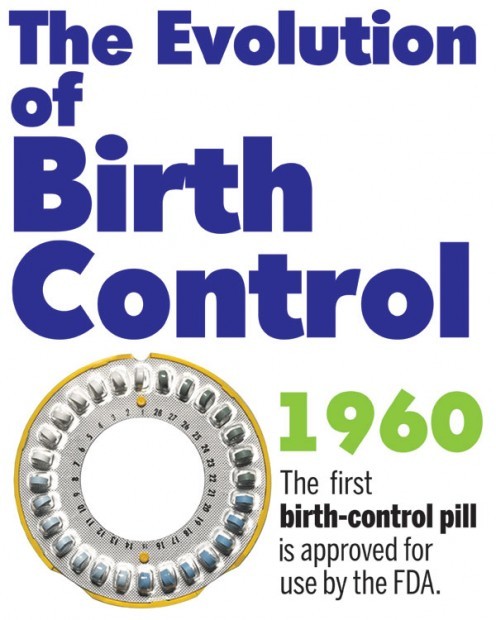
A lengthy article appeared recently in New York Magazine entitled “Waking Up from the Pill”. Of the various retrospectives on the birth control pill that have appeared in the mainstream media this year — the 50th anniversary of the Pill’s introduction in 1960 — this one, despite several shortcomings, is notable for its in-depth discussion of its often ignored negative side effects.

A Different Sort of Birthday Party

The writer, Vanessa Grigoriadis, begins with an almost mocking description of a 50th birthday party held this fall at a swanky Manhattan hotel, complete with an “enormous cake, with lettering that spells out ONE SMALL PILL. ONE GIANT LEAP FOR WOMANKIND. ONE MONUMENTAL MOMENT IN HISTORY.”
She quotes Kelli Conlin, president of the National Institute for Reproductive Health, who declares to her fellow partygoers, “Today, we operate on a simple premise—that every little girl should be able to grow up to be anything she wants, and she can only do so if she has the ability to chart her own reproductive destiny.”
Grigoriadis goes on to recount a story shared by the event’s M.C., Cybill Shepherd, about when she started to have sex as a teenager:
“One day, my mom took me to my family doctor. He wrote something on a prescription pad and said, ‘Take one of these every day, and all your periods will be regular.’ ” She laughs heartily. “What a thrill! He didn’t even tell me it was birth control.”
Is it just me, or is there something terribly wrong about a doctor writing a birth control prescription for a teenage girl without even telling her it was birth control?

From “Safe Sex” to “Safer Sex” to “Damage Control”

A few years ago I attended an abstinence speakers’ workshop and heard a talk by Dr. Meg Meeker, a pediatrician and author of Your Kids at Risk: How Teen Sex Threatens Our Sons and Daughters.
At one time, as a matter of course she had prescribed birth control to her teenage patients when they requested it.
But then when her patients came back several months later, she witnessed the effects (things like STDs, but even more so, depression and other emotional effects) on them once they became sexually active.
Dr. Meeker has noted how our culture (and with it, the medical profession) has gone from once talking about “safe sex”, to “safer sex”, and is now in “damage control” mode.
This is, of course, due to the tired old assumption that kids are “going to do it anyway”, and that there is exactly nothing parents (or other authority figures like teachers, clergymen, physicians, etc.) can do to stop them. Sure, they know that some of them will end up pregnant or get an STD, but the very best that can be hoped for is to minimize the risk. And so, like the doctor Cybill Shepherd went to as a teenager, many are content to shrug their shoulders and throw birth control at them.

Infertility: “The Pill’s Primary Side Effect”

Grigoriadis spends a great deal of time explaining the connection between the Pill and skyrocketing rates of infertility:
The fact is that the Pill, while giving women control of their bodies for the first time in history, allowed them to forget about the biological realities of being female until it was, in some cases, too late. It changed the narrative of women’s lives, so that it was much easier to put off having children until all the fun had been had (or financial pressures lessened).
Until the past couple of decades, even most die-hard feminists were still married at 25 and pregnant by 28, so they never had to deal with fertility problems, since a tiny percentage of women experience problems conceiving before the age of 28.
Now many New York women have shifted their attempts at conception back about ten years. And the experience of trying to get pregnant at that age amounts to a new stage in women’s lives, a kind of second adolescence. For many, this passage into childbearing—a Gail Sheehy–esque one, with its own secrets and rituals—is as fraught a time as the one before was carefree.
Suddenly, one anxiety—Am I pregnant?—is replaced by another: Can I get pregnant? … The Pill didn’t create the field of infertility medicine, but it turned it into an enormous industry. Inadvertently, indirectly, infertility has become the Pill’s primary (physical) side effect.
This is, of course, an inconvenient truth that the major “pro-choice” organizations don’t want to touch with a 10-foot pole:
And ironically, this most basic of women’s issues is one that traditional feminism has a very hard time processing—the notion that this freedom might have a cost is thought to be so dangerous it shouldn’t be mentioned.
Earlier this decade, there was an outcry when the American Society for Reproductive Medicine commissioned an ad campaign on New York City buses featuring a baby bottle fashioned as an upside-down hourglass (around the same time, Sylvia Ann Hewlett, an economist, made headlines with a suggestion that women would be better off having their kids in their twenties and entering the workforce a half-dozen or so years later).
The National Organization for Women called the city bus ads a “scare campaign.” NOW’s president even wrote an editorial claiming that “women are, once again, made to feel anxious about their bodies and guilty about their choices.”

The Pill and Population Control

Grigoriadis also notes in her article a dirty little secret about the Pill that’s all too often overlooked — especially by today’s biggest proponents thereof:
The whole point of the Pill from the beginning has been population control. Even though America was consuming more than 50 percent of the world’s resources in the late fifties (with 6 percent of the world’s population), eugenicist fears of the developing world’s excessive procreation ran rampant during the Cold War.
Reading this, I couldn’t help but call to mind these words on the subject of putative problem of “overpopulation” written by Malcolm Muggeridge:
To me, this is a fantasy. You see, when I was young, people used to say the poor had too many children. Or, at the time of the famine in Ireland, they would say that the Irish had too many children. We were taking the food from Ireland, and the Irish were starving, and we said they were starving because they had too many children.
Now, we who are sated, who have to adopt the most extravagant and ridiculous devices to consume what we produce, while watching whole, vast populations getting hungrier and hungrier, overcome our feelings of guilt by persuading ourselves that these others are too numerous, have too many children.
They ask for bread and we give them contraceptives! In future history books it will be said, and it will be a very ignoble entry, that just at the moment in our history when we, through our scientific and technical ingenuity, could produce virtually as much food as we wanted to, just when we were opening up and exploring the universe, we set up a great whimpering and wailing, and said there were too many people in the world.
It’s pitiful.
Quite so. And we have the Pill to thank for it.

What Does the Future Hold?

After pointing out the increasing number of babies born following IVF and cryogenic egg freezing, Grigoriadis offers a Brave New World-esque glimpse into what the future could hold:
That may be the world to which many are heading—even more medicalized and technologized, where all women freeze their eggs and submit to assisted reproductive technologies, and with it, more complicated choices and questions that bioethecists love to hash over.
Even Carl Djerassi, one of the inventors of the Pill (before he became a Stanford professor, playwright, and sci-fi novelist), has suggested that all forms of birth control will eventually become obsolete and the Pill “will end up in a museum.”
In his imaginings, girls and boys will deposit their eggs and sperm in a reproductive bank to be frozen at 20 or so and then get sterilized.
They’ll want to do this because genetic diagnoses of embryos will become increasingly sophisticated, and no one will want to risk having a child with birth defects, let alone a child of an unpreferred gender or one predisposed to a hairy back. When these people want to have children, either one or six, at 30 or 60 years old, they’ll make a withdrawal from the bank.
In light of this horrifying dystopian vision, recall the masthead that twice appeared in 1921 on Margaret Sanger’s magazine, Birth Control ReviewBirth Control: To Create a Race of Thoroughbreds.
As Catholic writer Mark Shea has often pointed out, there are Two Phases of History:
  1. What could it hurt?
  2. How could we have known?
Don’t you wish that years ago there was someone, somewhere, who could have predicted — contra what everyone else in the world seemed to be saying at the time — that widespread acceptance of the Pill (and other forms of birth control generally) would lead to such terrible consequences?
Oh, wait — there was.


SOURCE:
LAGNIAPPE:

Monday, May 17, 2010

Inventor of Birth Controll Pill Condemns It

Sourced below . . . Please note that bolding is my emphasis.
Eighty five year old Carl Djerassi the Austrian chemist who helped invent the contraceptive pill now says that his co-creation has led to a "demographic catastrophe." 

In an article published by the Vatican this week, the head of the world's Catholic doctors broadened the attack on the pill, claiming it had also brought "devastating ecological effects" by releasing into the environment "tonnes of hormones" that had impaired male fertility, The Taiwan Times says.
The assault began with a personal commentary in the Austrian newspaper Der Standard by Carl Djerassi. The Austrian chemist was one of three whose formulation of the synthetic progestogen Norethisterone marked a key step toward the earliest oral contraceptive pill.

Djerassi outlined the "horror scenario" that occurred because of the population imbalance, for which his invention was partly to blame. He said that in most of Europe there was now "no connection at all between sexuality and reproduction." He said: "This divide in Catholic Austria, a country which has on average 1.4 children per family, is now complete."

He described families who had decided against reproduction as "wanting to enjoy their schnitzels while leaving the rest of the world to get on with it.


The fall in the birth rate, he said, was an "epidemic" far worse, but given less attention, than obesity. Young Austrians, he said, were committing national suicide if they failed to procreate. And if it were not possible to reverse the population decline they would have to understand the necessity of an "intelligent immigration policy." 


The head of Austria's Catholics, Cardinal Christoph Schonborn, told an interviewer that the Vatican had forecast 40 years ago that the pill would lead to a dramatic fall in the birth rate in the west.

"Somebody above suspicion like Carl Djerassi ... is saying that each family has to produce three children to maintain population levels, but we're far away from that," he said.
Schonborn told Austrian TV that when he first read Pope Paul VI's 1968 encyclical condemning artificial contraception he viewed it negatively as a "cold shower." But he said he had altered his views as, over time, it had proved "prophetic."

Writing for the Vatican daily, L'Osservatore Romano, the president of the World Federation of Catholic Medical Associations, Jose Maria Simon, said research from his association also showed the pill "worked in many cases with a genuinely ... abortive effect."

Angelo Bonelli, of the Italian Green party, said it was the first he had heard of a link between the pill and environmental pollution. The worst of poisons were to be found in the water supply.
"It strikes me as idiosyncratic to be worried about this," he said.

Catholic News Agency details the claims by the president of the International Federation of Catholic Medical Associations, Dr Jose Maria Simon Castellvi, who outlined a series of scientific arguments said to confirm the prophetic nature of Pope Paul VI's encyclical on artificial contraception.
In an article published by the L'Osservatore Romano, the Spanish doctor pointed to the Federation's recent document commemorating the 40th anniversary of Humanae Vitae, which "irrefutably shows that the most widely used anti-ovulatory pill in the industrialised world, the one made with low doses of estrogen and progesterone, in many cases works with an anti-implantation effect; that is, abortifacient [effect], because it expels a small human embryo."

Castellvi also pointed out that "this anti-implantation effect is acknowledged in scientific literature, which shamelessly speaks of an embryo loss rate. Curiously, however, this information does not reach the public at large."

He also pointed to the "devastating ecological effects of the tons of hormones discarded into the environment each year. We have sufficient data to state that one of the causes of masculine infertility in the West is the environmental contamination caused by the products of the 'pill'." Castellvi noted as well that the International Agency for Research on Cancer reported in 2005 that the pill has carcinogenic effects. 

After explaining that the "natural methods of regulating fertility are the ones that are effective and that respect the nature of the person," Castellvi stated that "in celebrating the 60th anniversary of the Universal Declaration of the Rights of Man we can say that the contraceptive methods violate at least five important rights: the right to life, the right to health, the right to education, the right to information (its dissemination occurs to the detriment of information about natural methods) and the right of equality between the sexes (responsibility for contraceptive use almost always falls to the woman)."

SOURCES 
Catholic News   January 2009 
Catholic Church renews its attack on contraceptive pill (Taipei Times)
Medical Association points out prophetic nature of Humanae Vitae (Catholic News Agency)
Taylor Marshall - Canterbury Tales

Sunday, May 9, 2010

The Birthday of the Pill: 50 Years Later

by Vicki Thorn (Headline Bistro)  Please note: bolding is my emphasis.

From Time to Our Sunday Visitor, many articles are appearing in the media, both faith-based and secular, as society acknowledges and examines the impact of the birth control pill 50 years after its entrance on the U.S. scene.

Yet having read these and others, it seems there are more issues that aren’t being discussed.

For example, one would think that the environmental factor of artificial birth control would be of interest these days. The Pill and related contraceptives are contributing to waste water management issues around the world, since their hormonal content does not break down when excreted from the human body and entering our water system. We have a growing awareness today of the impact of certain plastics and other industrial chemicals on the body, as well as that of estrogens used in poultry and cattle feed. But estrogen is in our drinking water, too, and the role of contraceptives cannot be ignored.

“Estrogen and estrogen-like compounds enter water rivers, steams and reservoirs from many sources and remain there even after passing through water treatment plants,” reported one article, which went on to state that about 80 percent of 139 U.S. rivers have been found to be contaminated with trace estrogen compounds. “Naturally occurring estrogen compounds come from livestock urine and feces, and from human excretions which also contain contraceptives and hormone replacement medications.”

(For more information, the first book I encountered on this subject is called The Estrogen Effect: How Chemical Pollution is Threatening Our Survival, by Deborah Cadbury.)

Current writers are starting to explore the impact of exposure to such contaminants on the hormones of developing boys and girls. Leonard Sax, M.D., Ph.D., speaks about this in his books Boys Adrift: The Five Factors Driving the Growing Epidemic of Unmotivated Boys and Under Achieving Men and Girls on the Edge: The Four Factors Driving the New Crisis for Girls. His conclusions are dead on, and males especially seem to suffer: additional estrogen can lower testosterone in males, cause bones that do not mineralize properly, and result in genital malformations.

“Scientists are finding that exposure to environmental estrogens early in life, particularly in utero and in early infancy blunts or eliminates sex differences in behavior,” Dr. Sax writes in Boys Adrift.
There are many unanswered questions and outcomes that go far beyond the decision to use the Pill.
There is another outcome that needs to be considered. Some years ago in the book 13th Gen: Abort, Retry, Ignore, Fail? by Neil Howe, William Strauss, R.J. Matson and Ian Williams, the authors speak about an impact of contraception: we could suddenly control our fertility.

The arrival of children was no longer a spontaneous random event, and in the authors’ description, children moved from being “welcomed to wanted.” Our desire for children moved them from gift to possession. Because they were “planned,” we came to expect that they would fulfill our expectations. We wanted a boy and a girl, and we fantasized about the feisty football player and the delicate ballerina and the academic super star.

“Children are expected to provide a return for all the care, attention and money lavished on them,” said the authors of Lying-In: A History of Childbirth in America. “Children have become extensions of the parent’s selves, demonstrations of the parent’s genetic potential, economic expenditures, emotional self-sacrifice and childbearing ability.”

I remember magazine covers in the ‘90s depicting children with barcodes on their foreheads. The message? Children are the ultimate possession.

Yet on the flip side of this possessive mentality toward children was another phenomena: the “oops” child.
You’ve probably heard parents say, “This is John and this Mary. And this is Sam, our little oops!” The child hears this description and quickly concludes that they were a mistake, and this becomes their enduring identity.

Whenever I speak about this, people in the audience nod, because I have described their experience. They have lived with a deep existential wound that either drove them to become “super achievers,” as if to prove their parents wrong, or to write life off as one who was never meant to be here. One woman recently volunteered that her sister was the unplanned child in the family and that they call her “Boo Boo” to this day. She said she’d never thought of the damage that may have done to her.

Contraception and abortion mean we have absolute power to decide who comes into the world and who doesn’t. In the book Teenage Wasteland: Suburbia's Dead End Kids, author Donna Gaines observes that the Baby Boom generation – the last conceived before legalized abortion –“grew up understanding that one generation now had the legitimate right to annihilate another, up front.”
I would add that contraception is part of this mentality as well.
Who would think that a little pill could change so many things!

Wednesday, December 30, 2009

China's Saving the Earth, One Baby at a Time

The following information brings to focus the eerily Orwellian culture that is blossoming in China and, given the non-reaction by Americans, spreading towards us at an alarming rate of speed.

Have you heard that China is at the forefront of saving the planet? Yep, and they are doing it one baby at a time. That is, killing one baby at a time, according to Max Schulz from the Washington Examiner:
Want to save the planet from global warming? Forget about getting rid of coal plants or the internal combustion engine. Get rid of the humans. They're the true problem.

That insidious message gained new currency with the United Nations Copenhagen climate change circus this month. While the conference likely will be remembered for participants' failure to reach a binding emissions reduction agreement, its legacy may be that it brought mainstream respectability to the fringe left-wing notion that mankind is a scourge on the planet.

In so doing, it has breathed new life into population control proposals that had seemed discredited since the population bomb alarmists warned about in the 1960s and '70s failed to detonate.

During the Copenhagen summit, Chinese representatives chillingly claimed credit for stifling 400 million births since the implementation of their one-child policy in 1979. That policy, which generally limits couples to no more than one offspring, is enforced by government mechanisms including coerced abortion and sterilization.

By Beijing's calculations, its fascistic family planning regime has prevented 18 million tons of CO2 from being released into the atmosphere. Snuffing out lives to snuff out emissions seems a perfectly fair tradeoff not just to Beijing, but to opinion makers who have come to regard China as the global green exemplar.

That was the position taken by MIT graduate, Peggy Liu, chairwoman of the Joint U.S.-China Collaboration on Clean Energy in a recent debate sponsored by the Economist. Liu, a 2008 Time magazine "Hero of the Environment," argued that China must be given credit not just for what it is doing on climate change, but "for what it is not doing." By that she explained, "China's one-child policy reduces energy demand and is arguably the most effective way the country can mitigate climate change."
It kind of figures that CNN would call this person a hero, doesn't it?

As  Matthew Archbold says over at Creative Minority Report:
Can you imagine being present at a conference where they're boasting about 400 million forced abortions and not storming out or at least slamming the door. But no, our President and the elite of the world sat on their hands or worse . . . . even approved. 400 million?! That's not environmentalism, that's a holocaust.


Charter Member

PEGGY LIU

Chairperson
Shanghai, China
China Clean Energy Hero


An article on Time Magazine introduced Peggy Liu.


SOURCES: 
 Ever wonder how CMR chose their name?
 "Believing Christians should look upon themselves as such a creative minority and ... espouse once again the best of its heritage, thereby being at the service of humankind at large." --Joseph Ratzinger
Graphics : Steve Landsberger Chinese Propaganda Posters
Please note: Bolding within quotes is MY emphasis.
Blog Widget by LinkWithin