Showing posts with label Traditions. Show all posts

Sunday, May 31, 2015

To Reject the Tree is to Reject Its Fruit

One must ask our Bible-loving non-Catholic brethren where the Bible came from. How did the early Christians know which Jewish scriptures to reject and which ones to accept as inspired?
When Jesus walked the earth, there was much debate amongst the Jews about what books belonged in their canon and which did not. Some sects accepted books like Enoch and Jubilees, others didn't. The Pharisees accepted the prophets. The Sadducees did not.

How, then, did the early Christians know which Gospels and Epistles were inspired, and which should be rejected as apocryphal?

These decisions were officially debated and decided by the Roman Catholic Church at the Council of Nicea in the 4th Century. So, if we reject the Roman Catholic Church and its authority to hold dogmatic councils under the guidance of the Holy Spirit, then... we are also rejecting the Bible! To reject the tree is to reject its fruit.


other related resources:

http://www.blogos.org/theologyapologetics/gospels-accurate.php

http://noquestionleftbehind.blogspot.com/2009/04/where-did-bible-come-from.html

Note: I do not know if the book (pictured above) is good . . . . but I just ordered it.  :-)
Here is the review:

This is an exceptional little book! Bishop Graham's prose style is delightful, though he can be a bit forceful at times, which may offend some Protestants. (But, if you disagree with him on any point, study up and try to refute it. You'll be sorely disappointed.) 

Some reviewers here have complained that the text isn't footnoted, but not many books written around the same time period (1911) were. He does, however, list a brief bibliography in the back, and if you're willing to do the research, his facts check out. It is also slightly outdated, in that he quotes and praises the Douay-Rheims Bible, which has been supplanted by the New Jerusalem and New American Bibles in English-speaking Catholic liturgical use. 

It is unfortunate that Bishop Graham isn't around to update this with information about the Dead Sea Scrolls, as they contain even more support for the Catholic canon of the Old Testament. But these trivialities aside, this is an excellent brief history of where the Bible came from, how the canon was determined, and the Catholic thoughts on the Bible. Highly recommended for Catholics, of course, and non-Catholics especially.


Thursday, February 7, 2008

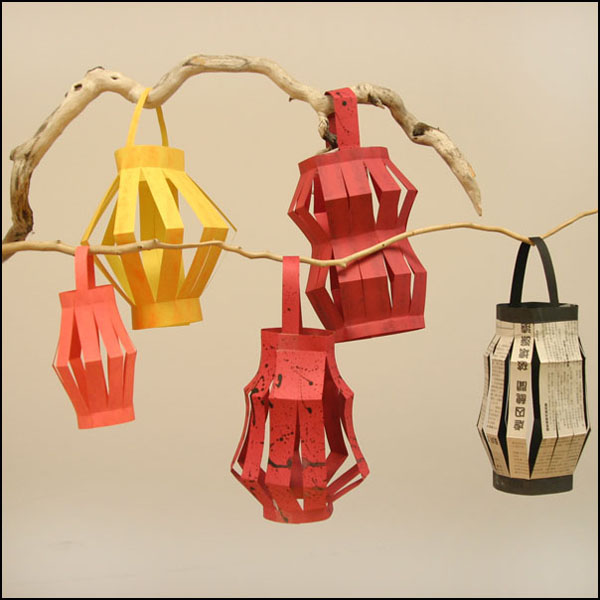
Happy Chinese New Year!


By the Chinese calendar, 2008 is the Year of the Rat.

Our family will be making Chinese food for dinner tonight (Chicken Orange Stir Fry). Then we plan to watch Ratatouille as we sew Valentine gift bags.


Clash of cultures? Nah!


We like to think of it as a colorful kaleidoscope of cultures.


Our dinner recipe for Chicken Orange Stir Fry

INGREDIENTS:

  • 4 boneless, skinless organic chicken breast halves, cut into 1-inch cubes
Marinade:
  • 2 tablespoons Chinese rice wine or dry sherry
  • 1 tablespoon cornstarch
  • Sauce:
  • 1/3 cup orange juice* (*If this flavor is too overpowering, mix orange juice and water to make the 1/3 cup)
  • 2 tablespoons dark soy sauce
  • 1 teaspoon sesame oil
  • 1 teaspoon brown sugar
  • 1/4 teaspoon chile paste
  • 1 clove garlic, minced
  • 1 slice ginger, minced
  • Oil for stir-frying, as needed

PREPARATION:

Place the cubed chicken in a bowl, and add the marinade ingredients. Marinate the chicken for 30 minutes.

While the chicken is marinating, prepare the sauce ingredients and the garlic and ginger.

Heat the wok (or big, deep skillet) and add oil.
When oil is ready, add the garlic and ginger and stir-fry until aromatic.

Add the chicken and stir-fry until it changes color. Push up to the sides of the wok (or skillet), making a well in the middle. Add the sauce.

Combine the sauce and the chicken. Stir-fry for another minute and serve hot. We eat this with brown & wild rice.

Saturday, July 21, 2007

The Sign of the Cross

For some it is just a mechanical part of starting and concluding time talking to God through prayer. For some, it seems no more than a good-luck charm to make superstitiously before stepping up to bat. We know it is much more than that!


  • In baptism, a cross is traced on the foreheads of the baptized.
  • In confirmation, a cross is traced on the foreheads with sacred oil called “chrism.”

As the cross is traced, the name of the triune God is pronounced, Father, Son and Holy Spirit. To delve deeper, we need to look at our history.
This practice reaches quite far back.


  • In Gal 6:14-18 Paul says “I bear the brand marks of Jesus in my body.”

  • In the book of Revelation, those doomed to death have the mark of the beast on their foreheads while the 144,000 in white robes have been sealed with the name of God and the Lamb (Rev 7:3-4, Rev 11:1) . . . the sign of the cross? Most probably.

In the early Church, the sign of the cross was seen as the brand mark on the body of a Christian that indicated that he or she was now the property of a new master and under the protection of that master.

The blood of the lamb on the doorposts of the Israelites protected them from the Angel of Death who “passed over” their homes. The sign of the cross on the Christian says “hands off!” to the power of Darkness.
Note that Jesus says to his disciples “I have given you power to tread on snakes and scorpions and all the forces of the enemy, and nothing shall ever injure you” (Lk 10:19). The sign of the cross is the sign of this power.

When we make the sign of the cross we say, "In the name of the Father, the Son and the Holy Spirit" -- we are IN God's family, we are claiming that.

But this sign means even more than belonging to the triune God.

  • It indicates how and why we’ve come to belong to God and to be entitled to his protection.
  • It means that for my standing with God, I do not trust in the good deeds that I’ve done or the “good person” that I am.
  • Rather, I stake my claim to heaven on what Jesus did for me on Calvary.
  • It means that I am saved by a pure gift of His love, by grace. “May I never boast of anything but the cross of our Lord Jesus Christ!” (Gal 6:14).
In this simple little sign is contained the very essence of the gospel. Scott Hahn says it well. He says it is our faith in a gesture. That is the power of that symbol of crossing ourselves.
Everything in our Catholic heritage is like this – full of rich meaning that we do well to both remember and delve deeper.
Blog Widget by LinkWithin