Showing posts with label Catholicism 101. Show all posts

Thursday, April 7, 2011

My Catholic Faith Delivered

I can only say . . . "AMAZING!" 

I just learned about and ordered The Didache Series. We are starting with The Scriptures but I do not know if I can wait to order Church History. They also have the Faith and Life series for younger students.
You can click "free lesson" to get an idea of what the course is like.
Here is the info on
My Catholic Faith Delivered in general and then
The Didache Series Online:
My Catholic Faith Delivered provides in-depth learning programs and video tutorials on the web for all levels of knowledge of the Catholic faith. This is accomplished by combining Catholic content with innovative technology. It is the ideal program for a teacher or a catechist looking for resources and courses, and for a Catholic who simply wants a better understanding of the faith. These fantastic courses are available on the Internet anytime, anywhere—making learning convenient and fun. Our dynamic courses feature engaging lessons, interactive activities, and immediate assessments that give real-time feedback on learner progress.
My Catholic Faith Delivered and Midwest Theological Forum
present The Didache Series Online
 
This web-based series draws from sacred scripture, the lives of the Saints, and the Doctors and Fathers of the Church. Its engaging online format allows for anywhere and anytime learning. The assessments offer real-time feedback and the reporting data eliminates the extra paperwork needed to track progress. The embedded links and videos allow for additional learning and support. Voice-overs and the ability to enlarge font size are standard for those who need that additional support.


GENERAL:
http://www.mycatholicfaithdelivered.com/Home.aspx?pagename=Homepage


DIDACHE SERIES:
http://www.mycatholicfaithdelivered.com/home.aspx?pagename=Didache&utm_source=MCFD+Email+Blast&utm_campaign=8bf8d403d9-Didache_03_31_11&utm_medium=email


Monday, November 8, 2010

Catholics and the Bible

Q - It is a common misconception that Catholics are discouraged from reading the Bible. While this isn't the case today, is there anything in recent Catholic history that could have spawned this idea? I'm thinking about my grandmother's generation, people in their sixties and seventies now.

A - Thanks for the question.
The first thing we need to do is shed ourselves of our on preconceptions.
We take for granted now that anyone can have a Bible if they want one. Yet not only has this not been the case through most of Christian history, but it isn't the case in many parts of the world (North Korea, Middle Easter countries, etc).
Remember that a majority of people during Christian history couldn't read well, if at all. Most didn't have access until books, even after the printing press, because of large costs.

With all of this background, we can see that throughout most of the 2,000 years of history of the Catholic Church, Bibles were not a common possession of common people. So, the way they learned about the Bible was through other means -
  • Mass
  • fine art (think stained glass windows, murals, paintings, etc)
  • stories
  • oral tradition. 
With this being said there are a number of "myths" surrounding the Catholic Church and the Bible:

1 - The Catholic Church chained Bibles to keep the from the people.
-more accurately, they were chained because they were so valuable and a church might have only one copy. Not to "keep them from the people" but rather to keep them from thieves.

2 - The Catholic Church discourages personal Bible reading because they know that if you read the Bible for yourself you will find the truth behind their lies.
-This one sounds silly, but many believe it to be true. The problem is that the Catholic Church has always maintained that Scripture is indispensable to a Christian.

3 - The Catholic Church banned early translations of the Bible (even killing some of the translators), because they didn't want common people to read it and know the truth.
-Rather, the Church banned early translations because they were done "unofficially" and without proper Church oversight. They contained many errors and the Church banned them to protect the people from bad translations just as the Jehovah's Witnesses have a bad translation today. [if only they protected us from some of the bad translations we have today :-) ]

There are many more myths, but what happened is that they worked there way into the consciousness of many people, even today.

Another factor in perpetuating the myth is the confusion that ensued after Vatican II in the 60's. If you want to read about some of that, you can in previous posts I have made here and here. Suffice it to say that many problems in the Church were amplified after Vatican II, including Biblical teaching.

Peace.

SOURCE: Aggie Catholic

Saturday, October 9, 2010

What are the Precepts of the Church?

Q - Can you tell me what the precepts of the Church are and what they are for?


A - The precepts of the Church are given in order to rightly order our moral life and to set the minimum level of Sacramental participation and obligations that a Catholic should abide by. As the Catechism states:

2041 The precepts of the Church are set in the context of a moral life bound to and nourished by liturgical life. The obligatory character of these positive laws decreed by the pastoral authorities is meant to guarantee to the faithful the very necessary minimum in the spirit of prayer and moral effort, in the growth in love of God and neighbor:
The precepts are:
  1. To attend Mass on Sundays and Holy Days of Obligation, and to refrain from work and activities which could impede the sanctification of those days
  2. To confess our serious sins to a priest – receiving the Sacrament of Reconciliation, at least once a year, if serious sin has been committed.
  3. To receive Our Lord in the Eucharist at least once a year during Easter Season.
  4. To observe the days of fasting and abstinence established by the Church
  5. To contribute to the support of the Church.
Remember that these are the basics and that we are called to a life of holiness - not a life of being just average Catholics.

SOURCES:
CCC
Aggie Catholic

Monday, August 9, 2010

Are Astrology and Catholicism Compatible?

"Let the astrologers stand forth to save you, the stargazers who forecast at each new moon what would happen to you. Lo, they are like stubble, fire consumes them; They cannot save themselves from the spreading flames . . . Each wanders his own way, with none to save you" (Isaiah 47:13-15).
 
 
I don't know what the stars say . . . . but Catholicism says, "No."

Tuesday, June 1, 2010

Do Catholics Worship Mary?

—ANSWER—

No! 
Worship— in the Divine senses of the term—is given by Catholics to God alone and never to Mary nor to any other creature in Heaven or on earth.

We Catholics believe that among all the saints in Heaven, Mary is first in standing, in influence, in intercessory power.

Therefore, Catholics pray to Mary to pray for them, while they pray themselves to her Divine Son, Jesus, the one Supreme Mediator for the redemption of all mankind.

SOURCE: Campaigners for Christ Handbook
Thomas J. Flynn & Co., New York (19th cent.)

H/T Linda S.

Wednesday, May 5, 2010

Friday, April 16, 2010

Pope Benedict XVI CEO (not!)

I found a wonderful post that helps us correct the distorted image of the pope as dictatorial CEO or Marine commandant.  
 " . . .the (utterly incorrect) image persists that the Catholic Church is a kind of global corporation, with the pope as CEO, the bishops as branch managers, and your parish priest as the local salesman.  And according to that image, the pope not only knows what’s going on all the way down the line, he gives orders that are immediately obeyed all the way down the line.
  Or, to vary the mis-impression, the Church is like the United States Marine Corps—there, at least according to legend, when the Commandant issues an order, everyone from the highest-ranking four-star to the lowliest Parris Island recruit staples a salute to his forehead and does what he’s told."

The full post can be found @ The Archdiocese of Denver website. Author: George Weigel
Specific article link: http://www.archden.org/index.cfm/ID/3745 

Monday, April 5, 2010

Top 15 Misconceptions About Catholics

A wonderful article from: Online Christian Colleges found through A Catholic Mom in Hawaii.

With nearly one quarter of the U.S. population Catholic, they make up a huge part of society and the largest Christian denomination. Yet with so many, how is it they are so misunderstood and characterized by films, television shows, etc.?
Failing to do the proper research explains a great deal of it. With a simple search on the internet, we were able to find many interesting answers to the top 15 misconceptions about Catholics. They are both from official sources, reporters, academics, and more.
    1. Priests Are More Likely to be Pedophiles : The most dangerous of all myths concerning Catholics, this can lead to many negative and unfair consequences. Recently in a book entitled Pedophiles and Priests, an extensive study – and the only one of it kind – took a look at the pedophile statistics of over 2,200 priests. It found that only 0.3% of all Catholic clergy are involved in any pedophilia matter, guilty or not. This number is actually very low and according to Counter Pedophilia Investigative Unit, who reports that children are more likely to be victims of pedophile activity at school with nearly 14% of students estimated to be molested by a member of the school staff. 2. Everything in “The Da Vinci Code” is True : Even author Dan Brown himself doesn’t agree to this. In this free film from Hulu, Mr. Brown admits to writing his novel as a step in his own spiritual journey. As he confesses to being swayed by his extensive research, the experts behind the research weigh in with facts. Simon Cox is the author of “Cracking the Da Vinci Code” and tells more about his work in this documentary. If you don’t have 90 minutes to view it, you can get the real story behind Opus Dei, the villain organization in the novel, from ABC news. 3. Women Are Oppressed in the Catholic Church : Although women are still not eligible to become priests as explained by Pope John Paul II, they were still acknowledged as valued members of the church as far back as 1947. In a Papal Directive from then Pope Pius XII, he expressed his admiration of women “to take part in the battle: you have not sought to do so, but courageously you accept your new duties; not as resigned victims nor merely in a defensive spirit.” Also, in 2004 then Pope John Paul II historically appointed two women theologians to the International Theological Commission and named another as the president of the Pontifical Academy of Social Sciences. 4. Catholicism and Science Don’t Mix : It has been theorized that science leads down one path while religion, such as Catholicism, leads down another. However, in the mid 1200’s Saint Thomas Aquinas was preaching just the opposite: that all paths lead to God. In fact, one of his most notable quotes “The truth of our faith becomes a matter of ridicule among the infidels if any Catholic, not gifted with the necessary scientific learning, presents as dogma what scientific scrutiny shows to be false” is listed on Brainy Quote. A modern day professor from Columbia University also gives his take on the subject.
    Source : nndb.com
    5. Catholics Place Too Much Emphasis on Jesus’ Mother : Believing in the Immaculate Conception – the virgin conception of Christ – is a key factor in Catholic belief. But does that mean that she sits above or even at the same level as the Son or the Father? This article by Bishop Pivarunas details her role in the church and even uses actual scripture to explain why. 6. Catholics are Cannibals : The Eucharist is a sacred part of the Catholic mass and in it, followers are asked to eat the body and drink the blood of Christ. But is it a figure of speech or is there actually flesh and blood involved? In this article from Catholic Answers, two church officials certify that the answer is in keeping with the Catholic faith. The meaning of the scripture quote “”I am the bread of life; whoever comes to me will never hunger, and whoever believes in me will never thirst” is discussed thoroughly. 7. Catholics Don’t Believe in Dinosaurs : In a popular Catholic forum, the question of the dinosaur comes up. Expert Apologist Michelle Arnold tackles the age-old question in a four part answer, which acknowledges the existence of dinosaurs. It includes universal death, life after death, the opportunity to question one’s own faith, and reassessing one’s own beliefs. 8. No Meat on Fridays : Until 1983 Catholics were required to abstain from eating meat on Friday for the 40 days of Lent and the following Holy Week. However, the rule was changed to “abstinence from meat, or from some other food as determined by the Episcopal Conference, is to be observed on all Fridays.” Which basically means that instead of foregoing meat on Fridays, Catholics can choose to give up something else. In addition, abstinence and fasting are required on both Ash Wednesday and Good Friday. 9. No Alcohol for Catholics : Although a certain sense of moderation is present, Catholics are actually encouraged to feast, have joyous processions, and an elated thanksgiving for God’s grace. In fact, this priest from Saint Mary Magdalen in Brighton proclaims that champagne is the preferred drink of Catholics.
    Source : youngfogeys.com
    10. Catholics Worship Saints : Father Jeff explains the myth behind saint worship in this video from YouTube. He explains how prayer is different from worship and how the lives of saints are remarkable. He also uses the more modern comparison of a Prayer Line in his explanation. 11. Purgatory is Another Hell : Catholic belief in purgatory can be confusing and perplexing. More a belief on the afterlife, purgatory is believed to be where sinners go to “purge” themselves of sin before entering heaven. This encyclopedia article from New Advent has more. 12. Catholic Mass is Really Just a Homily : Father Z. is a popular Catholic blogger and priest in Philadelphia. In answering a reader’s question, he discusses the issue of the importance and meaning of the homily in Mass. In short, a homily is a sort of summary by priest or deacon after a reading and before the Procession of Faith. Father Z. explains exactly what it is and why it is important. 13. Catholics Can Confess Anything Away : A belief that confession is just a formality with no real consequence is a myth. In fact, just the act of admitting a sin can be doubly cathartic and reconciliatory. This article tells more on what is expected of a good confession. However, even the the Vatican warns that a confession is not a counseling session. 14. The Pope is Perfect : Even Catholics don’t believe this and state that papal infallibility has its limitations. In an article from Slate, papal infallibility is explained as pertaining to when the pontiff is ruling on a spiritual or moral manner. There is a similar infallibility belief when ecumenical councils are ruling on similar issues. Other than that, the pope and the rest are just as fallible as the anyone. 15. Children Aren’t Allowed at Mass : In another answer from Father Z., he tackles the question of what to do with “wiggle aged” children at Mass. He addresses the positives and negatives of bringing these kids to church, what should be done, and what can be done as an alternative. Over 160 comments were left after the blog entry and tell even more on the subject.
Even if you disagree with any or all of the top 15 misconceptions about Catholics, it is important that you understand them fully so as to know why. Whether writing a paper, dating a Catholic, or just looking to understand the faith more, there is much to know and much damage to undo caused by myths.
There is also loads more to be found on the internet and a good place to start is these Twelve Catholic Myths where Michael Voris tackles even more misconceptions on Catholics.

Sunday, December 27, 2009

How Are the Gospels Different?

The four canonical Gospels (that’s the four that we have in the Bible) – Matthew, Mark, Luke and John – are very similar but also quite different. In each of the gospels we receive a different “portrait” of Jesus. What I mean by that is that each one communicates something different about Jesus – different approaches and messages about the same God, if that makes sense. The word gospel literally means “good news”. We are given the word in the very beginning of Mark’s work: “The beginning of the gospel of Jesus Christ (the Son of God).” - Mark 1:1

Matthew, Mark and Luke are known as the synoptic gospels. Syn meaning “alike” (as in “synonym”), optic meaning “view” (as in optical allusion or optometrist). The three synoptic gospels give a similar view of Jesus, a little distinctive from St. John’s fourth (and last) gospel. One recognizable difference is that St. John’s gospel doesn’t have pure parables, as the other three have.
What you will find as you read and pray through the other three gospels, however, is that what each saint is communicating about Jesus is very different. And that’s a good thing. Those differences should make us feel even better about the Gospel – if they were too similar, many would think it was all just “copying” and that, perhaps, only one person really thought these things.
The four Gospel authors come from different backgrounds, wrote to different audiences, transcribed their gospels at different times and focused on different aspects of Jesus’ ministry, life and mission.
Many Biblical scholars spend their entire lives trying to prove that Mark was written after Matthew, or that there is another source (called “Q”) that was used (in addition to Mark) as a sort of “template” (outline) for both Matthew and Luke. And while those are some really interesting debates and conversations to get into someday, if you really want to, it’s probably far more important for you to focus on the here and now, as you read through the rest.
Here’s a little BACKGROUND on each, to help you on your way.
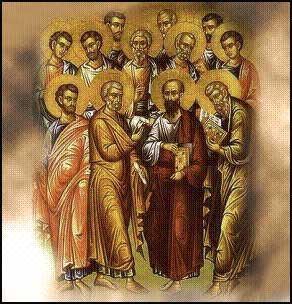
Matthew and John were part of the original twelve apostles (Mt. 9:9, Jn. 21:24). ~~~~>
Mark
and Luke were not part of the original twelve.
Mark was a young disciple of Jesus’, traveled with St. Paul (Acts 12:25) and was close with St. Peter (1 Pet. 5:13).
Luke was a physician who spent a great deal of time with St. Paul. (Col 4:14, Phl. 1:24 and 2 Tim. 4:11). Luke also wrote the Acts of the Apostles.

Audience

Matthew is writing to Jewish Christians of Palestine.
Possibly originally written in Hebrew (i.e., the Aramaic dialect), and afterwards translated into Greek, either by Matthew himself or by some person unknown. Though Matthew wrote mainly for the Jews, most were familiar with the Greek language.

Mark is written for a Roman audience.
We know this because there are no allusions
to Jewish Law, or references to Jewish culture like there are in the other Gospels. This
Gospel was written primarily for a group of people who did not know Christ first hand.

Luke is writing to all non-Jewish readers, but especially Greeks who know very little about the Jewish faith.
We know this because he translates all the Hebrew and Aramaic terms into Greek as well as explaining the Jewish Laws, customs and geography. It’s also important to remember that the Greeks admired human perfection and so Luke often shows Jesus as the perfect answer to their quest…the IDEAL.

John is writing to the early Church, close to the end of the First Century.
This Gospel had a much more universal audience (not necessarily for a particular group of people) than the other Gospels.
<~~~ about the image: "Carpet Pages" were purely decorative, and were so named for their resemblance to eastern carpets. This carpet page from Folio 27v of the Book of Kells depicts the symbols for the four evangelists: Matthew the Man Mark the Lion Luke the Calf (or Bull) John the Eagle (derived from the vision of Ezekiel)

Datelines

Matthew - written before the destruction of Jerusalem (Matt. 24) which was in 70AD, and some time after the events it records. The probability is that it was written between the years A.D. 60 and 65.
Mark
- Just before or just after the destruction of the Temple in 70 A.D., probably about 63 AD.
Luke
- It was more than likely written between the years 80-90.
John
- Around 90-95 AD, there is great evidence to support this dateline.

Central Themes

Matthew - The central theme is Christ the Messiah and King came to establish a Church.
Mark
- The central theme is on action and service, more than teaching.
Luke
- The central theme is liberation and healing
John
- The central theme is the identity of Jesus, the reality of the Sacramental Church
My hope and prayer is that you would read and pray all four, taking your time as you do. And once you finish with St. John, go back and begin through St. Matthew’s again. You can spend the rest of your life in just the four gospels and they will ever get stale, that’s the beauty (and depth) of God’s work.


Source:  The Bible Geek over @ Holy Spirit Interactive Youth
Re-post from 5-29-2008

Brush Your Teeth with The Books of the Bible


You know how teachers suggest that children sing the "Happy Birthday" song (twice) while they wash their hands to ensure that they are scrubbing those little hands for a sufficient amount of  time? Well, we have a new plan in our house.  We are reciting the books of the Bible! We're starting with the Old Testament and when we get really good (and fast) at those we will add the books of the New Testament!

They are now taped to each bathroom mirror.  Let the memorizing begin!

Old Testament

Genesis
Exodus
Leviticus
Numbers
Deuteronomy
Joshua
Judges
Ruth
1 Samuel
2 Samuel
1 Kings
2 Kings
1 Chronicles
2 Chronicles
Ezra
Nehemiah
Tobit
Judith
Esther
1 Maccabees
2 Maccabees
Job
Psalms
The Proverbs
Ecclesiastes
The Song of Songs
Wisdom
Ecclesiasticus
Isaiah
Jeremiah
Lamentations
Baruch
Ezekiel
Daniel
Hosea
Joel
Amos
Obadiah
Jonah
Micah
Nahum
Habakkuk
Zephaniah
Haggai
Zechariah
Malachi


New Testament

Matthew
Mark
Luke
John
Acts of Apostles
Romans
1 Corinthians
2 Corinthians
Galatians

source: Catholic Online
Ephesians
Philippians
Colossians
1 Thessalonians
2 Thessalonians
1 Timothy
2 Timothy
Titus
Philemon
Hebrews
James
1 Peter
2 Peter
1 John
2 John
3 John
Jude
Revelation

Friday, May 22, 2009

Mark Shea's Spam of God

WARNING --MILD, FOLLOWED BY, EXTREME SARCASM AHEAD

Almost every other day it seems, I will (like thousands of other Catholics) open my email and get something like this specimen (culled from my “delete” file):

Dear Mark, just came from your Website and have some questions. It sounds like you were a “Protestant” before becoming a Catholic? I don’t know which church you were in but I have to question whether you were ever taught the Word of God there? If you had been in a church which taught the truth concerning Baptism according to the Word of GOD and not the “traditions of men” you would have learned that not only does baptism NOT save nor “grant justification” but it is ONLY for those who ARE BORN-AGAIN by the SPIRIT of GOD by placing their faith in the LORD JESUS CHRIST! It is to be symbolic of the new birth ALREADY ACCOMPLISHED by GOD as Romans 6 clearly teaches! PLEASE READ the Gospel of John and pray asking GOD to show you HIS TRUTH - HE LOVES THE WORLD and DESIRES TO SAVE the LOST - which we all are apart from the New Birth which IS FREELY offered to ALL ! Please read and be saved! I will be praying for you in JESUS Name. Carolyn

You have to wonder what is going through the minds of people who write such stuff. What do they think they are accomplishing?

One is terribly tempted to reply:

The Word of God? What’s that? Never heard of such a thing. Is that, like, the Bible? We used to read something called a “Bible”, I think, at our old Church. But that was an awfully long time ago.

Boy, thanks for setting me straight. I have never ever ever heard before that Jesus Christ loves me and desires to save the lost with his free gift of grace! I always thought that I had to perform magical rituals to make God love me. But now that you have so thoughtfully set me straight, I see clearly that when that big black book we used to read in my old church-that-never-taught-me-the-Bible says “Baptism now saves you” (1 Peter 3:21) what it means is “Baptism does not save you.”

And thanks also for explaining that when Romans 6 says, “All of us who have been baptized into Christ Jesus were baptized into his death” and “We were buried therefore with him by baptism into death, so that as Christ was raised from the dead by the glory of the Father, we too might walk in newness of life” this absolutely has nothing whatever to do with Baptism. I really appreciate you setting me straight on that as well.

And finally, thanks for making me see that all that stuff in John 3 about being born again of water and the Spirit really means water and the Spirit are complete opposites.

Golly. It is so good to finally —after all these years—have somebody who really teaches the Word of God clue me in. Who would have thought that all those years of studying…. what’s that big black book called again? Ah! Yes! “The Bible”.

Anyway, who would have thought that all those years of studying the Bible could have left me so totally ignorant of what Scripture really means? Thanks ever so for enlightening me.

Do these people who write Evangelical converts to the Catholic faith honestly believe that they are the first people in the universe to ever suggest reading the Bible? If not, then what are they thinking?

I wonder this even more when I get Godspam from people who assure me they are “writing in Christian love” and then proceed to send me a farrago of raving nonsense and/or documentable lies about what the Church teaches. When you write them back and refer them to biblical and catechetical sources which show a) the fact that Catholic teaching comports with biblical teaching and b) their lies about Catholic teaching (”Mary worship!” “The Pope is sinless!” “The Mass re-sacrifices Jesus!”) are bunk, they write you back with that gooey smile of condescending “Christian love” and inform you (and I quote) “I am not interested in discussing truth issues with Catholic apologists.”

The sheer hermetically-sealed Pride is both astonishing and (as is the doom of Pride) hilariously funny. And the pride is very widespread in the ranks of anti-Catholic types who write in “Christian love”. I discovered this when I posted “Carolyn’s” note. One Catholic reader commented with his tongue firmly planted in cheek:

When I converted to Catholicism, it was the statue worship that appealed to me the most, but banner worship has its appeal as well. Historians have been able to show that pagans also worshipped primitive banners so either one has authentic Catholic-pagan connections.

I also liked that I didn’t have to read the Bible any more and that I would have to earn my way to Heaven. Besides that, I really appreciated the fact that I could check my brain at the door and blindly follow the leaders.

A really cool part of Catholicism is that now I can commit all of my favorite sins and then go to Confession right before I go out and do them again!! Actually, while I was Protestant, I guess I did that too, but without the Confession part. But sitting in that little room just feels so holy, especially with the statues nearby.

The cannibalism aspect, I have to admit, grosses me out a little, but I comfort myself by knowing that it is a false doctrine anyway and so it is only really bread.

This cracked me up and I replied :

I know exactly how you feel. For me, it’s the chance to worship Mary and adore her as the Creator of Almighty God that is so appealing. And, of course, I really love knowing that salvation is completely up to me and my righteousness apart from the grace of God. Also, the deep pride I feel in the Church’s many Inquisitors, cold-blooded killers, persecutors, perverts and criminals was a big draw. Some people think this is a problem, but I frankly have no idea what they are talking about. I am aware of no commands of God against these things because, of course, I never read the Bible.

Which reminds me: I just love adding absurd human traditions, myths and legends to the pure word of God. Also, I get a real kick out of enslaving myself to little rules and regulations so as to chain myself with fear and cut myself off from the love of God.

If you’re an ignorant benighted Catholic like me, feel free to add your favorite spiritually crippling legend, lie, or practice to the pool. The more the merrier! That’s what makes enslavement to the traditions of men and blindness to the saving gospel of Jesus Christ fun!

The response was volcanic. In a combox thread that ran to a couple hundred posts, readers vented very wittily on all the Godspam they’d gotten over the years from anti-Catholics writing (and re-writing and re-writing) in “Christian love”. Some of the choicer bits included:

I like the fact that I don’t have to really talk to God- I can just repeat prayers by rote thousands of times over to earn my way to heaven.

It’s also cool that I can have a man forgive my sins- I don’t even have to ask God!
——————————————————————————–
I especially like the vain repetitious prayers of the Rosary and the sacrilegious practice of calling priests “Father.”
——————————————————————————–
Yeah, having to constantly make up my own prayers as an Evangelical was a real drag. I love being able to mindlessly repeat rote prayers all the time; it makes me think for myself less so I’m easier for the Vatican to deceive and brainwash.

But for me, the best thing about being a Catholic is calling the Holy Father “Lord God the Pope” and worshipping him. That and being able to acknowledge Mary as the Fourth Member of the Trinity. You have no idea what a drag it was worshipping that all-male God of Evangelicalism!
——————————————————————————–
I can’t get over the sense of history, what with all the witch-burnings, Crusades, Inquisitions and pox-carrying missionaries to celebrate.
——————————————————————————–
Being a part of the corporate machine that sells salvation is the biggest reward for me. Especially since I get such a big cut of the profits.

Hopefully our next Pope will start another cold-blooded massacre like the Inquisition or the Crusades, and I can earn my justification based on my “score” of how many Protestants or Muslims I kill. I’ll “stand before God” … ATOP A PILE OF SKULLS!
——————————————————————————–
You people forgot the best part about being Catholic. The priest gets to kill and re-sacrifice Jesus over and over again at every Mass, because His death on Calvary was entirely insufficient. Granted, that’s not what the Council of Trent actually said, but we all know that underneath that’s what they were really thinking.
——————————————————————————–
I like sending money to Rome, which just adds it to the billions of billions they’ve collected over the millennia. So what if it makes me a sheep, at least I’m being fleeced for God!
——————————————————————————–
Oh, and don’t forget those magnificent buildings in Italy built by underpaid and unappreciated workers and filled with art by artist who never got their due. All for the greater glory of the bishops who lived like kings off the sweat of their flock. It’s great to be a part of all this!
——————————————————————————–
My favorite part of being Catholic is praying to dead people. Why should you pray to God alone when you have so many different go-betweens that all have their own specialties!!!

Christopher is the expert at travel, Francis in dealing with animals, and Anthony for finding things!

God is just so busy Himself that these “helpers” allow him more time to directly answer Protestant’s prayers.
——————————————————————————–
I like all the cathedrals the Freemasons built for us.
——————————————————————————–
Being a male chauvinist, what finally drew me to the Catholic Church in 1999 was the infinitely wise and completely arbitrary subjection of women in every aspect of their lives. I love the male-dominated doctrines of telling women what to do with their bodies, not “allowing” them to be ordained, etc.
——————————————————————————–
Oh, yes and believing that sex is evil but that we also must have as many babies as humanly possible! But that makes sense since of course we’re the Antichrist and therefore we want to be as evil as possible!

And I also love how we unnecessarily make the simple Gospel stultifyingly complex, what with bored logic-chopping monks and friars having nothing to do all day but sit around making up abstruse theological questions with which to confuse people.
——————————————————————————–
I like knowing I don’t really believe what I say I believe.

I like being afraid of science and logic.

I like our plan to put cameras in everyone’s bedroom.

I like the new church the Masons invented for us in 1962.
——————————————————————————–
Once in awhile, I really enjoy whipping up in myself a nice raw sense of guilt. Generally, it is about nothing in particular.
——————————————————————————–
Where else can a poor girl like me hope to grow up to be a saint and be worshiped by millions?
——————————————————————————–
I like the clothes they give us to make us go to heaven. Even though we betray Christ’s message by thinking non-Christians, actual CATHOLICS can only go to heaven if we wear brown cotton patches.
——————————————————————————–
Today, a first Friday, reminds me that I love all of our superstitious traditions. All I have to do is go to 9 First Friday Masses and I’m home free!
——————————————————————————–
I like how Catholic, crypto-paganism connects me with ancient Egyptian and Babylonian religious practices. I mean, talk about continuity!
——————————————————————————–
I also love the fact that we as Catholics secretly worship “Bel-Marduk” the sun god of Babylon…then we erected a giant obelisk in front of St. Peter’s in his honor! I was always a big fan of the sun, so I thought… why not just worship it?
——————————————————————————–
And don’t forget how we conveniently renumbered the 10 commandments so that we did not have to obey them. Who wants to go to church on Saturdays anyway? We found it more convenient to go on Sundays in direct violation of God’s sabbath commandments…the bonus is all the idol worship that comes with it.
——————————————————————————–
Yeah, I also love the fact that we can go to church on Saturday, so we can just go get drunk afterward and party all Saturday night long. Having to get up on a Sunday morning is such a pain when you’re so hung over.

I’m so glad they made this rule for us drunkards. Thank you, Catholic Church!
——————————————————————————–
I like how the IHS on the Host actually stands for Isis, Horus, and Set (SET especially) and that my priest has a human skull in the tabernacle as well!!!
——————————————————————————–
I actually love it that the Pope is truly the anti-Christ…I mean, we’ve all seen that upside-down cross above his very head in that “throne” of his. Of course it has nothing to do with St. Peter (first pope - yeah, right!) being crucified upside down; it’s the sign of Satan. I can prove it too…didn’t you see “Rosemary’s Baby”? Well, then.
——————————————————————————–
I also like the arguments about how many angels can (liturgically) dance on the head of a pin.
——————————————————————————–
It never fails to cheer me up thinking that when I get married my parents will have to sell all their worldly belongings and go live on the street to pay the priest to perform the wedding, thus keeping the Pope in all those solid gold diamond-encrusted vestments he wears.
——————————————————————————–

What strikes me about all this is how so much “Christian outreach to Catholics” appears to be—judging from its utter failure to elicit anything but exasperated mockery from its educated targets—entirely ordered toward the self-medication of the witness and utterly uninterested in the actual human being who is the ostensible object of the “love” of the “evangelist”. The Catholic who dares to do anything other than be the passive object of the “gospel” being thrust at him by the anti-Catholic is, by turns, an enemy, a deceiver, a dupe, a stumbling block, and a rebel. He is never a person. He has no place in the alleged “relationship with God” which is allegedly being proposed to him.

Which, of course, leads me to wonder if and when I act the same way. God save me if I do!

Mark Shea is Senior Content Editor for Catholic Exchange and a weekly columnist for theNational Catholic Register. You may visit his website at www.mark-shea.com check out his blog, Catholic and Enjoying It!, or purchase his books and tapes here.

Get Mark Shea's 3-CD set of talks, An Evangelical Discovers the Catholic Faith. Contents include:

"By What Authority?: An Evangelical Discovers Catholic Tradition"

"This is My Body: An Evangelical Discovers the Real Presence."

"Behold Your Mother: An Evangelical Discovers the Blessed Virgin Mary

Only $30 for the 3-CD set, shipping and handling included. (Also available on cassette tape.) Email Mark at chez.ami@verizon.net to order or click here.

More comments from source:

  1. neiders says:

    I love this article! It sums up all of the misunderstandings about Catholics in a neat package for me to use.
    Unfortunately there are many ex Catholics or lukewarms who belieive this stuff too. I have several in my family who have gone over to non-denominational or Protestant faiths and will try to tell me them! The result of poor/non-existant formation or catechesis in their youth? Interestingly enough, I managed to not end up that way, and never got this out of the same formation. Praise God!
    We have a lot of work to do. Thanks for providing such a comprehensive list of what we are up against.

  2. HomeschoolNfpDad says:

    It never fails to cheer me up thinking that when I get married my parents will have to sell all their worldly belongings and go live on the street to pay the priest to perform the wedding, thus keeping the Pope in all those solid gold diamond-encrusted vestments he wears.

    Since we Catholics still maintain that myopic tradition of men that disallows divorce, the best part is that my parents will only ever have to do this once. I can certainly understand the attraction of submitting the entirety of one’s private life to the abstruse scrutiny of a secular court. Though such a prospect is tempting, I must confess that I’ve already milked my parents for all they are worth. So a second go-round just wouldn’t be the same.

    Of course, the whole children thing is a huge draw as well. After listening to what Luther and Calvin had to say on the subject, we just couldn’t resist. It is quite easy, after all, to chase down ten or fifteen children. Compare that to memorizing Bible verses! We are particularly drawn by the fact that the secular culture is completely supportive of the Catholic position on this matter. This makes it all even easier.

  3. PrairieHawk says:

    I can see that I have yet to be initiated into the world of anti-Catholic diatribes. The most that has ever happened to me on my blog is that a fellow suggested that it was “interesting” that I was “renumbering” the Ten Commandments. I heard the Church shaking on her foundation at that, but I posted a polite reply and he went away. Nothing like the stuff I read about in Mark’s article. Maybe that’s because nobody reads my blog? I think I like it that way!

  4. Bruce Roeder says:

    Don’t forget the extra books we get to add to the Bible!

    Not that we would ever read it, of course.

  5. jgillen says:

    I’m in real trouble - my big black book is white. Thanks Mark

  6. fjindra says:

    And my “black book” is actually red-covered. of course what would you expect for a priest who, like all priests, really is an agent of the devil!

  7. krisrevelle says:

    I don’t know who you people are but I think I love you. Just got confirmed this Easter in the midst of a career in protestant vocational ministry. So glad to clarify just how crazy I am for doing so. Have to run and pick up a gift Crucifix for a friend because I just don’t get that Jesus isn’t on there anymore. Silly me. Keep up the good work!

SOURCE: Catholic Exchange

Wednesday, February 18, 2009

Infallibility - An Invitation Heeded

Fr Dwight Longenecker, over at Standing on My Head, is reading a conversion story and apologetical book called The Invitation Heeded,  by James Kent Stone, published at the end of the 1800s.  After reading his post I wanted to read the book and mentally started calculating how much money I had to purchase it -- if I could find it. I came up with  $4.35.  Not too promising!  "Ah well," I thought, "I will look for it anyway. . . . put it on my wish list."  

God is so good  . . . .  I found the actual book itself online!  It is linked above for your convenience.

Let me quote Standing on My Head. The apologetic points he makes are wonderful.  I have included some of the comments, too. Bolding is my emphasis as are my notes in red.

Fr Dwight Longenecker says he is reading, The Invitation Heeded, with a view to editing it for re-publication by the Coming Home Network.

"In the chapter on infallibility the author makes the very good point that rather than the Catholic Church's stance on infallibility being nonsensical, it is the churches who deny infallibility that are absurd.

The essential Protestant position is, "Our church is merely a human institution. It is not infallible." And yet they demand allegiance of the faithful to the beliefs and moral teachings of their church. But if their church, by their own insistence, is fallible how can they demand obedience and loyalty to their teachings? There is a logical hiccup here of enormous magnitude. Some of my protestant friends have left churches because they disagreed with the pastor's interprtation of scripture. I think many protestants feel they go to church for the fellowship and praise. Their idea of worship seems to synonomous with praise. Am I misunderstanding this? They pick and choose their scripture teachers according to . . . ?  What they "feel" is right?

"Ah!" the Protestant will object, "Our church is fallible, but the Holy Scriptures are not, and it is the Holy Scriptures in which we place our confidence--not in the traditions of men." Of course, this begs the question because Protestants of every stripe--from radical Episcopalians with their Mother Goddess worship and homosexual marriage to mainstream Evangelicals to Jehovah's Witnesses all claim that their beliefs and practices are derived from and at least consistent with Scripture.

In fact, while denying that their leaders are infallible, every religion must act as if they are infallible, otherwise their religion would cease to function. Whenever Bob the Baptist steps through his church door he functions on the basic assumption that his pastor does not teach error in the matter of faith and morals. (this is the definition of infallibility) Likewise, Esther the Episcopalian and Martin the Methodist and Frank the Four Square Apostolic Church of the Redeemed of the Fourth Degree-ist all assume that their pastors teach without error--otherwise their religion wouldn't work. They have to assume infallibility in practice, even if they deny it in theory.

The fact of the matter is, all religions function on the assumption that their church leader is  (or they, themselves are)  infallible.  Catholics are just the only ones who dare to make the claim, and how can Catholics make such an audacious claim?

There are only three options:  1) they are insane and/or deluded 2) they are liars 3) It's true."

comments:

kkollwitz said...  
Jesus was infallible, and most people who heard him didn't believe everything he said, doubted his authority, discounted the stuff that didn't make sense to them, discarded what they disagreed with. Given that precedent, we should expect his infallible representative to get at least as bad a reception.
 
Paul Smith Jr. said...  I always thought it was weird that Protestants deny that the Pope guided by the Holy Spirit could be infallible while each individual Christian guided by the Holy Spirit would be infallible when reading Scripture.   

Wednesday, July 9, 2008

Treasure Chest of Fun & Fact

A great find!

Treasure Chest of fun & facts from The American Catholic History Research Center and University Archives

<~~ Here is an example of a page from the archives of ACUA Digitized Online Materials


Description from the American University site at the online archives page:

Treasure Chest of Fun & Fact
A Catholic comic book fondly remembered by generations of parochial school students.
To view the WRLC Digital project click here.

Sunday, June 29, 2008

The Lamb of God

"If you’ve never really dipped your fingers into the early parts of the Old Testament then you may have problems figuring out exactly what is meant when we pray, “Lamb of God, you take away the sins of the world, have mercy on us” or, when the priest says, "This is the Lamb of God who takes away the sins of the world. Happy are those who are called to His supper."

Fundamentally, the Lamb of God is a metaphor for Jesus. In Genesis 22 God tests Abraham by asking him to sacrifice his only son Isaac. Abraham is willing to obey this tough request, but when it comes to the crunch God supplies a ram as a replacement; echoing Abraham’s earlier words of comfort to his son, “God himself will provide the lamb.” Now there’s a prophetic word about Jesus if I’ve ever heard one!

The name also links to the lamb of the Passover that protected the Israelites from God’s impending judgement on Egypt (Exodus 12). Paul connects the dots for us in his guidance of the Corinthian church, explaining that Christ is our true Passover lamb (1 Corinthians 5:7) who saves us from death.

The first time John the Baptist saw Jesus, he said, “Look, the Lamb of God, who takes away the sin of the world!” (John 1:29). This was a pretty huge call, and having grown up in a Jewish family, yearly celebrating the Passover, and with a Priest for a Dad, John would’ve instantly recognized the importance of the coming of the Christ. I guess, over 2,000 years later, the real question for us is, do we?"


Elliot Taylor Source: Soul Purpose
Elliot Taylor
(author pictured above)
I like the style in which Elliot has written. I can read this to my Confirmation Class and they will "get it."

Please note: I have changed Elliot's examples of known prayers to reflect what we say at Mass

Tuesday, June 24, 2008

What's It All About, Alfie?

It is really very simple . . . . "God made us to know, to love, and to serve him in this life and to be happy with him for ever in the next." St. Mary's 1st grade religion class

H/T to GrandmaK @ A Bit of the Blarney


The chicken graphic is not from grandmaK & my
only excuse for adding it is my own twisted sense of humor!


I guess the sarcastic undertone begs the question,

"Do you choose to live as a child of God or a . . . . . chicken?"

Sunday, June 8, 2008

The Calling of St. Matthew (today's Gospel reading)

H/T to Jackie over @ CatholicMomof10. Thank you for sharing this great information!
Fr Guy Nicholls writes: Thought for the week here & below:


THE CALLING OF ST. MATTHEW

St. Matthew tells us in his own words about his calling by our Lord to be an Apostle. For those who know the painting of this scene by Caravaggio, which is to be found in the Church of St. Louis of France in Rome, it impossible to think of this event without seeing this picture in their mind’s eye. Matthew describes it in a very simple and unadorned way, yet one that leaves a great deal to the imagination.

Whereas Andrew, Simon Peter, James and John were fishermen, and the other Simon was a Zealot, or former insurrectionist against the Romans, we know nothing of the previous life of any of the other Apostles.
Matthew, also known as Levi, must have seemed to many at the time of his calling to have been the most unlikely to be chosen by Our Lord. He was a tax-collector—a way of life deeply hated by his fellow Jews since it involved co-operation with the occupying power for personal gain. A tax-collector was not only granted a license to gather the taxes from the local people on behalf of the Romans but was allowed to take his “cut” as a perk. So they were judged to be not only “collaborators” but also self-servers, lining their own pockets at their fellow-citizens’ expense. No wonder they were so unpopular!

Matthew records the celebration which he held to mark this enormous change in his life. He invited his friends, the other local tax-collectors and various public “sinners” whom the respectable folk shunned with distaste, even hatred. Yet Our Lord neither shunned nor hated them. He ate with them and so earned the Pharisees’ wrath and contempt. They throw this challenge in the face of Jesus’s other disciples: “Why does your master eat with tax-collectors and sinners?” What kind of rabbi is He, then? Look at the disreputable company He keeps! So it is that Jesus Himself replies to the Pharisees: “It is not the healthy who need the doctor. Go and learn the meaning of the words: ‘what I want is mercy, not sacrifice’. And indeed I did not come to call the virtuous, but sinners”.

It is the drama behind these words which Caravaggio captures in this wonderful painting. We see Jesus suddenly breaking with a sharp beam of light into this darkened room of men hunched over their pile of ‘filthy lucre’. Jesus’s outstretched finger points commandingly at Matthew who responds with amazement and an incredulous finger pointing back at himself in echo of Our Lord’s hand, as though he is saying, “Who? Me? Surely not!” The two older men are so absorbed in the money that they fail even to notice Our Lord, but the two younger men, flooded in the light passing from Jesus towards Matthew, are caught up with puzzlement at the sudden appearance of Our Lord and His companion who are dressed humbly, unlike the expensive and worldly garb of Matthew’s companions.

St. Matthew’s calling reminds us of Our Lord’s words elsewhere to His disciples: “You have not chosen me, it is I who have chosen you”. This most unlikely Apostle was to become the writer of the First Gospel and a martyr for love of Christ.

Matthew 9:9-13
As Jesus was walking along, he saw a man called Matthew sitting at the tax booth; and he said to him, "Follow me." And he got up and followed him. And as he sat at dinner in the house, many tax collectors and sinners came and were sitting with him and his disciples. When the Pharisees saw this, they said to his disciples, "Why does your teacher eat with tax collectors and sinners?" But when he heard this, he said, "Those who are well have no need of a physician, but those who are sick. Go and learn what this means, 'I desire mercy, not sacrifice.' For I have come to call not the righteous but sinners."


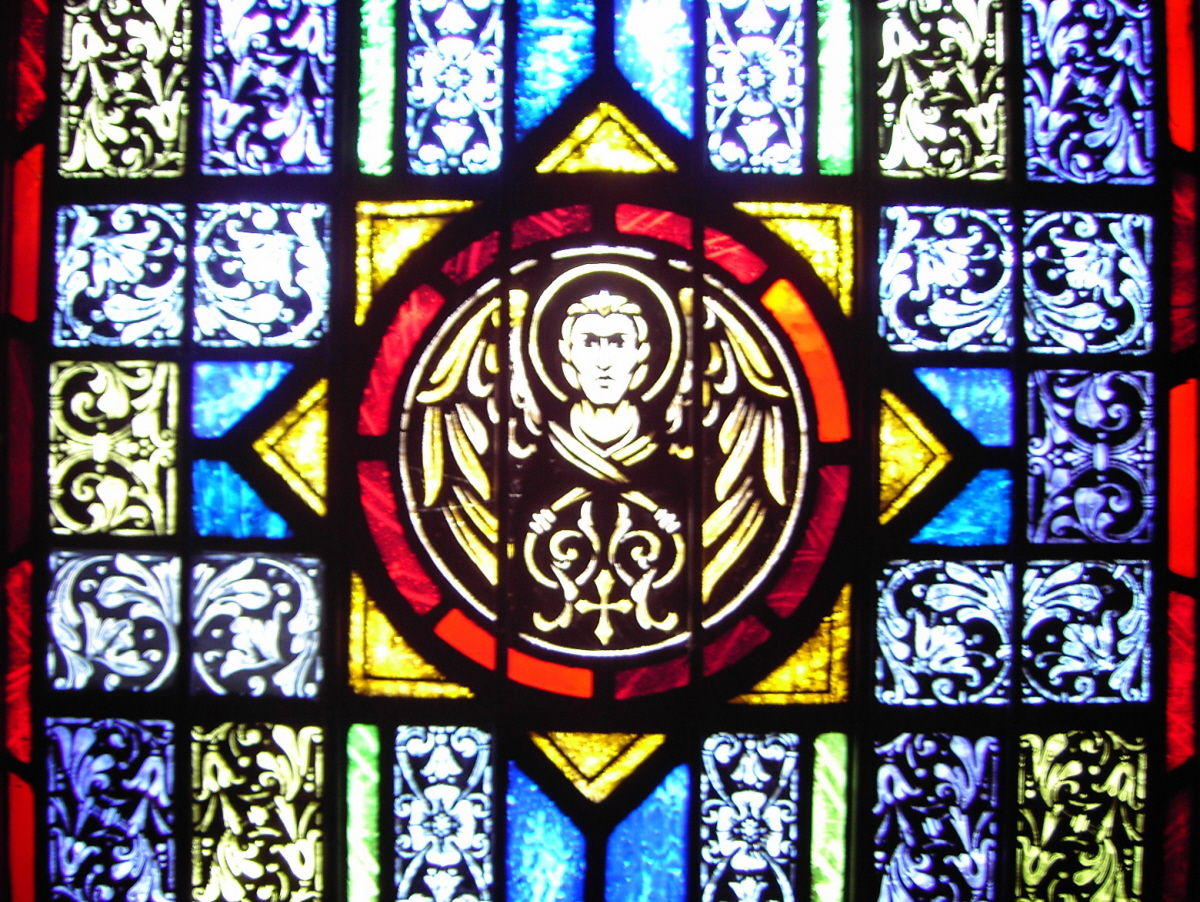
St. Matthew's Symbol - An Angel

Saturday, June 7, 2008

How to Grow Humility in Your Soul 101


I absolutely love this list from Sister Mary Martha. If you have not been to her blog you really should rush right over!!

How to Grow in Humility in Your Soul

1. Shut up. Seriously (and ironically coming from a blogger), no one needs to know what you think most of the time. There are times when it is very important that your voice be heard, but frankly, those times are very and far between. Want to practice some humility? Stop talking for a day. Or a week.

2. Forget about what you deserve. You don't deserve anything.

3. Understand that you deserve everything. Including cancer and not ever finding a parking space ever again.

4. Think about making other people comfortable.

5. Forget about your own comfort.

6. Get enough sleep or you'll be too cranky to keep practicing.

7. If you haven't memorized the Corporal Works of Mercy, do it now. I'll wait.

8. Try making up a song to help you memorize them.

I should stop making a list now. It's too much to remember. Maybe try one thing each day and focus on that. OH! one more!

9. Be grateful. Count your blessings.

Sunday, June 1, 2008

Live in God, Not in Fear

H/T to the Bible Geek! (aka Mark Hart)
It’s an interesting fact that the command repeated most often throughout the Scriptures is “be not afraid” or (its close grammatical relative) “do not fear”. The command not to fear (given to us by God) is repeated even more times throughout the 73 books, than the command to love. That should tell you something about how badly God wants us to live in Him and not in fear.
Think about that for a moment -- Live in God, Not in Fear. Pretty powerful in its simplicity and strength.

There are great places throughout the Bible that speak of courage and the need to trust in God in the face of fear. Here are some places (in the NAB Bible) that you can read and pray through. In fact there are 51 places -- pretty good number for a way to start each day of summer! We are going to start the second week of June and read one a day on weekday mornings -- that takes us through mid August.

Some of the Fear verses in Scripture (A few of these include more than one verse):

Gospels (#1 - #15) - Old Testament (#16 - #25) - New Testament (#26 - #51)

  1. MT 1:20
  2. MT 10:26, 28, 31
  3. MT 14:27
  4. MT 17:7
  5. MT 28:5, 10
  6. MK 5:36
  7. MK 6:50
  8. LK 1:13, 30
  9. LK 2:10
  10. LK 5:10
  11. LK 8:50
  12. LK 12:4-5, 7, 32
  13. JN 6:20
  14. JN 12:15
  15. JN 14:27
  16. ACTS 9:31
  17. ACTS 18:9
  18. ACTS 27:24
  19. 2COR 7:1
  20. HEB 13:6
  21. 1PT 2:17
  22. 1PT 3:6,14
  23. 1JN 4:18
  24. RV 1:17
  25. RV 2:10
  26. DEUT 1:21
  27. DEUT 31:8
  28. JOSH 1:9
  29. JOSH 10:8
  30. JOSH 11:6
  31. JUDG 6:23
  32. 1SAM 12:20
  33. 1CHRON 22:13
  34. 2CHRON 20:15, 17
  35. 1MACC 2:62
  36. PS 3:7
  37. PS 23:1
  38. PS 46:3
  39. PS 49:17
  40. PS 53:6
  41. PS 56:5, 12
  42. PROV 3:25
  43. ISA 7:4
  44. ISA 10:24
  45. JER 42:11
  46. JER 44:10
  47. BARUCH 6:14, 22, 28, 64, 68
  48. HOSEA 10:3
  49. HAG 2:5
  50. ZECH 8:13, 15
  51. MAL 3:5
Remember – there is no need to fear. God is in control.


TU again to Mark for organizing these scriptures for us! If your parish is looking for a speaker (especially for the youth group ages), I highly recommend the Bible Geek, Mark Hart! Here is an example of his style via a YouTube clip. Enjoy!


Monday, January 7, 2008

Today's Vocabulary Lesson: Parochial Vicar

Want to get to know something better? Learn the words.
Father Daren has a very helpful post entitled: A Parochial What?
I love how he explains the priesthood -- it is neither a job nor a career, but is rather a way of life.

Some priests happens to be pastors, others parochial vicars, others vicars general, others secretaries to Bishops, others are doctors or professors, etc., yet they are all priests. Every priest celebrates the sacraments, but not every priest is involved in the day-to-day life of a parish.
This is how he defines (in a very interesting post) parochial vicar -
  • parochial: an adjective meaning of or pertaining to a parish or parishes.
  • vicar: a person who acts in the place of another,” a “substitute,” or “a person who is
  • parochial vicar:
    The title of parochial vicar is relatively new, being introduced in the Code of Canon Law first promulgated in 1917 and again in 1983. Despite the new term, many priests are appointed as “associate pastors” or “assistant pastors.” The difficulty with the latter two titles is that there can only be one pastor of a parish. Any priests who assist the pastor are simply that: assistants. They do not share his authority, as the title of “pastor” suggests. Besides, parochial vicar sounds far cooler.
Father Daren goes on to explain the role of parochial vicar in some detail:
"A parochial vicar, then, is a priest who is assigned to assist a pastor of a parish. The parochial ministers and teaches in the name of the pastor and together with the pastor (canon 548 - §1).
A parochial vicar is, in a certain sense, “on loan” from the Bishop and can be called to perform another duty at any time; he does not enjoy the right of stability as a pastor does (canon 552).

A parochial vicar holds no jurisdictional authority within the parish in which he serves. He validly celebrates the Eucharist and hears confessions by virtue of his office as priest, but he needs the permission of the pastor to baptize infants and adults and to witness marriages (in many Dioceses this faculty is granted by the Bishop).

The Bishop may appoint a parochial vicar to assist in the totality of ministry to a parish (or parishes) or to a specific ministry within a parish or parishes (for example, prison ministry) (canon 548-§2).

The rights and responsibilities of a parochial vicar are not clearly defined by the Code of Canon Law but are rather left to the decree of appointment from the Bishop or to the “mandate of the pastor” (canon 548-§1).

Even so, by virtue of his office, a parochial vicar should assist the pastor in all areas of ministry within the parish (canon 548 -§2).
The only exception here is the application of the Mass pro populo, for the people of the parish, which is always the responsibility of the pastor.

In the absence of the pastor, a parochial vicar may not make changes to the parish – unless authorized by the pastor. If a parochial administer is not appointed by the Bishop is the absence of the pastor, the parochial vicar sees to day-to-day management of the parish, but again the parochial vicar need not apply Mass for the people (canon 549). This would really only apply in extended absences of a pastor, such as a sabbatical.

A parochial vicar should live within the rectory of the parish to which he is assigned, unless other arrangements are made (canon 550-§1).

Perhaps best of all, a parochial is entitled to the same vacation time as a pastor: four weeks per year, including two Sundays (canon 550-§3)."

In the end, as Father Daren says, a parochial vicar has all of the fun of being a priest, but without any of the responsibility. "A parochial vicar is not responsible for finances, insurance, building maintenance, faculty and staff, budgets, etc. (all of the things they don’t teach you in the seminary). A parochial vicar enjoys the happiness and satisfaction of the life of a priest without the headaches of a pastor."

H/T Servant & Steward
Blog Widget by LinkWithin