Friday, November 30, 2007

What is Free Rice?


"What if just knowing what a word meant could help feed hungry people around the world? Well, at FreeRice it does. . . the totals have grown exponentially."
--The Washington Post

FreeRice has two goals:

  1. Provide English vocabulary to everyone for free.
  2. Help end world hunger by providing rice to hungry people for free.

This is made possible by the sponsors who advertise on their site.

For each word you get right (in their free rice game) they donate 20 grains of rice through the United Nations to help end world hunger. 20 grains does not sound like much? Well, check out the "Totals" tab at their website! There are approximately 29,000 grains of long-grain white rice in a pound. (& take a look at my calculations at the bottom)

Whether you are CEO of a large corporation or a street child in a poor country, improving your vocabulary can improve your life. Spending a little time on the FreeRice Game is a great investment in yourself.

Perhaps even greater is the investment your donated rice makes in hungry human beings, enabling them to function and be productive. Somewhere in the world, a person could be eating rice that you could help provide.

The founders intended to start a charity, but the process was so long and cumbersome, they became a for-profit company, and just donate all the profits they make! (learned that tid bit from Simcha over at I Have to Sit Down)

Some of my kids and I played today!!
Soutenus (yours truly) got 2040 grains of rice.
Marker got 1000
GoGo and Pabz worked together to get 1000

My calculations:

4, 933, 763, 490 (grains of rice since 10-7-07) divided by 29, 000 = 170, 129.776 (pounds of rice donated so far)

Can you say "Wow!?" See, if we work together to take this thing to the tipping point we could get some people fed!
FreeRice is a sister site of the world poverty site Poverty.com.

St Andrew's Feast Day 11-30

Here is a quote from Scripture that tells of the first encounter of the future apostle, Andrew, with Christ:

"The next day again John was standing with two of his disciples; and he looked at Jesus as He walked, and said, "Behold, the Lamb of God!" The two disciples heard him say this, and they followed Jesus.
Jesus turned, and saw them following, and said to them, "What do you seek?"
And they said to Him "Rabbi" (which means Teacher), "where are you staying?"
He said to them, "Come and see". They came and saw where He was staying; and they stayed with Him that day, for it was about the tenth hour.
One of the two who heard John speak, and followed Him was Andrew, Simon Peter's brother.
He first found his brother Simon, and said to him, "We have found the Messiah" (which means Christ)."
John 1:35-42
St. Andrew
St. Andrew

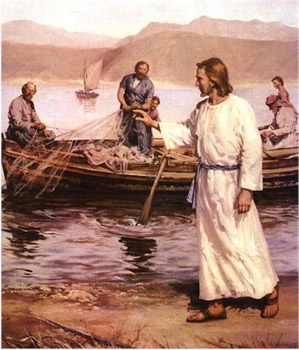
Andrew, like his brother Simon Peter, was a fisherman. He became a disciple of the great St. John the Baptist, but when John pointed to Jesus and said, "Behold the Lamb of God!"

Andrew understood that Jesus was greater. At once he left John to follow the Divine Master. Jesus knew that Andrew was walking behind him, and turning back, he asked, "what do you seek?" When Andrew answered that he would like to know where Jesus lived, Our Lord replied, "Come and see." Andrew had been only a little time with Jesus when he realized that this was truly the Messiah.

From then on, he chose to follow Jesus. Andrew was thus the first disciple of Christ. Next, Andrew brought his brother Simon (St. Peter) to Jesus and Jesus received him, too, as His disciple. At first the two brothers continued to carry on their fishing trade and family affairs, but later, the Lord called them to stay with Him all the time. He promised to make them fishers of men, and this time, they left their nets for good.

It is believed that after Our Lord ascended into Heaven, St. Andrew went to Greece to preach the gospel. He is said to have been put to death on a cross, to which he was tied, not nailed. He lived two days in that state of suffering, still preaching to the people who gathered around their beloved Apostle. Two countries have chosen St. Andrew as their patron - Russia and Scotland.

Thursday, November 29, 2007

The Liturgical Year Circle


I love this circle graphic of our Liturgical Year.

I have been searching for ways to weave the Liturgical year into our lives more tightly. I found a wonderful resource that matches our family's interests and rhythms. We are beginning our Advent with a wonderful resource book called Catholic Mosaic.

The book includes study guides for 52 children's picture books and is organized by themes in the liturgical year.

But it's much more than that . . . it is truly a mosaic of great ideas and activities to make the year of the Church come alive for families. It is specifically geared for K through 4th grade but I am looking forward to each book, activity and discussion as much as my kids!

Intimacy Separated from Love

The self is diminished, not fulfilled, when intimacy is separated from love.

To give our lives meaning, it is necessary to make commitments to each other. These define us. Mores and manners have everything to do with what distinguishes us as human. No amount of cultural programming (or pop culture propaganda) can ever deny that we have higher desires than those of the body.

When two people are in love and the man and woman are committed to each other (but not married) what makes sex wrong?
Well, first and foremost, remember 1st Thessalonians.
1 Thessalonians 4:3 - For this is the will of God, your sanctification: that you abstain from unchastity.
If a man and woman love each other it makes sense that they want the best for each other. . . above all, it makes sense to want to help each other to heaven. It is a betrayal to say you love someone and NOT want eternal life for that person.

In contrast to this culture of mutual betrayal and exploitation is the Church's sacrament of marriage, in which husband and wife participate in the awesome self-donation of Christ and his Bride to one another in mutual love.

For the sexual act is the highest incarnation of self-giving in human experience. By it, we say with our bodies, "I give you all of myself." To say that, apart from the sacrament of marriage is, bluntly, to lie. Unchastity is the lie of self-giving incarnated in the act of taking: taking the dignity and love of the other while exploiting them for the sake of a physical or emotional sensation.

This post is a kalaidascope of thought from Words of Encouragement, Mark Shea and Jeff Cavins with lots of input from me!

Christmas at Our House

I have been reading many posts lately about people's Christmas traditions. It is very interesting to be let into other families' worlds. Ever read The World According to Garp? This a glimpse of The World According to Soutenus. For better or for worse.
  • We are Midnight Mass people. Even if little ones fall asleep in our arms (which they usually do).
  • We don't "Christmas shop". Everyone else that I know does. No problem - but we don't.
  • We try to give well thought out, hand made or needed things as gifts in our family. If I find something with special meaning for someone at anytime during the year I often save it to give at Christmas. (I'd tell you when and where I found my oldest child's gift -- but she may read this and then I would have ruined the surprise!)

  • We love Christmas carols - I sing them all year round. (so the musak doesn't bother me -- it also doesn't encourage me to "Christmas shop" either - as I am sure it is intended to do)
  • This is the first year that my husband and I are directing a children's Christmas play at school. I think it may become a tradition. AND! It has the possibility of being amazing. Right now it is "cute" but the kids are starting to see the possibilities and are really diving into their roles. (3 year olds through 7th grade!!)
  • This year we are playing down "Santa" but talking a lot about St Nicholas. We put that red costumed guy called Santa firmly into the category of being part of the spirit of giving. Basically I am trying to keep a Christian spin on the secularization of St. Nick. Can that be done in 2007? We will see!
My Mom explained the Santas everywhere to me as " the representation of the spirit of giving" - I clearly remember this from when I was as young as 5 years old. My Mom used real words with us -- we grew into them :-)
  • Real Christmas tree? You betcha. When I was little we grew our own. Now we go to a Christmas tree farm with acres and acres of trees. We avoid the gift shop that sprung up a couple of years ago.
  • I would love to have enough land to grow trees again. It would be wonderful to have friends over to cut trees down together. I remember when my dad first planted ours they looked so small and helpless. Withing 4 years they HAD to be thinned out! My Dad and Mom left a row of trees on the property line -- WIDELY spaced -- even for the huge size they were. My parents are with God now -- I have been back to the old place a few times and those trees are nothing short of majestic.
  • I say Merry Christmas to one and all unless I know for sure that they would be offended because I already know that they are Jewish or Muslim. My atheist, agnostic and pagan friends get a resounding and joy filled, "Merry Christmas!" They seem to be fine with it and often offer the same words in response!
  • I loved sending Christmas cards but, frankly, I can't afford it any more. Heck, I don't even know what stamps cost at this point. Friends get hand delivered cards, emails or phone calls. I really do miss sending Christmas cards.


Ho, Ho, Ho!

Ready for this? In Sydney, Australia, not even one "Ho" (as in "Ho! Ho! Ho!") can be said by the gift giving, bearded man in a red suit. Yes, political correctness has gone so far as to say that the common greeting of Santa is now out of the picture. It is a shame that a social slur would take away the innocence of an exclamation!
At this rate they'll be changing the name for a real garden hoe to ground grabber. I guess then they'll have to change the name of the -Ho-tel industry. Obviously we don't want a place that advertises prostitution around. But oh wait, got to hit the fire fighters too, can't be calling the water lines that they save lives with "hoses".
In times like these let's not forget what's really important, being the first one in line to buy the latest lead coated toxic toy made by virtual slaves in another country.
(Hat tip for this tidbit to: Yahoo news and the commenters!)

Wednesday, November 28, 2007

St. Verge

A Sunday school teacher asked her class, "What was Jesus' mother's name?"
One child answered, "Mary."

The teacher then asked, "Who knows what Jesus' father's name was?"
A little kid said, "Verge."

Confused, the teacher asked, "Where did you get that?"

The kid said, "Well, because everyone always talks about Verge n' Mary.

No Censor Here

I read a funny post (then I scrolled and read another and another and another -- you know how that goes?!) over at I Have to Sit Down.

The main idea (that I took away from it) is that we are often censor ourselves according to the people around us. Yes, we do -- all of us do, at least to some extent. Part of that is just good manners and being sensitive to others. For example:
  • I do not discuss the horrors of abortion when around little children
  • I never talk about Harry Potter with a couple of my friends
  • I don't talk at length about how wonderful I think our school is (private Catholic) when I am with friends who send their kids to public school. They already KNOW how much I love our school -- I have already invited them to come!
  • I do not rant on and on about how much I detest TV when I am at my in laws and they have the big screen on 24/7
  • I bite my tongue when friends (who already know my stance on fast food) take their kids to MickyDs -- although they may get a big *sigh!* or eye rolling.
Sometimes we censor ourselves for totally different reasons. . . . for example:
  • people might think us odd or
  • it might start a conversation we do not want to attempt
Well, I, am resolving to avoid censoring myself in the latter cases. I am going to try to say what I feel is right and just . . . .let people think me odd and let the uncomfortable conversations begin! With a prayer and a spirit of thoughtfulness I am going forth -- wish me the best!


Tuesday, November 27, 2007

Knowledge is Good But. . . .

I found a post over at Radical Catholic Mom that I liked very much. This particular quote really made me think:
"Our gratitude towards Christ for His sacrifice SHOULD propel us to tell everyone how blessed we are and to invite them to receive the same gift."

Maybe you can relate to this - I have a strong desire to learn more and more about my faith. Most of the time that is a good thing but as with all good things they can be skewed to hinder us in our path towards God. (Think, Screwtape Letters!) Let me explain. At times, I have found myself using this whole "knowledge" thing as an excuse to NOT share my faith with others. I find myself falling back on the excuse that that I don't know enough to engage in an evangelical conversation.
This is, by no means, an excuse to stop the intellectual part of my faith journey. But any "lack of knowledge" should also not be an excuse to shy away from sharing my faith.

My mother used to tell me that the way in which we live should be a testament to our faith. Our choices, our personalities, our demeanor should shine with love for God. She said, "People always notice who you are and how you act. They may not always listen to what you say."She was a smart lady!

And, I need to remember that I am not required by God to know all the intellectual answers. It is OK to say, "I don't know," when asked those intricate questions that sometimes get asked -- "What is something called, where did a certain custom come from, where exactly is that in the Bible, etc."


Although I encourage you to read the post in its entirety, here are some more excerpts from Radical Catholic Mom's post. She points out another way the accumulation of knowledge can be skewed to our detriment.

"I thought I would do a crash course reminder of our Catholic mission.

#1) Our job is to spread the Good News of Jesus Christ. Our gratitude towards Christ for His sacrifice SHOULD propel us to tell everyone how blessed we are and to invite them to receive the same gift.

When we look at WHO Jesus chose to be his Apostles they were not the learned of society. They were not philosophers nor theologians. They were fishermen. Were His disciples much better from an intellectual perspective? Not quite. I am sure there was an educated person thrown in there from time to time (like the tax collector or the Roman Centurion) but for the most part the Scriptures show us that what is important from the world’s perspective is NOT what is important to God.

Am I saying that knowledge is NOT important? Nope. Not at all, but I am saying that knowledge can give us false confidence. We think “Oh yes, I KNOW my theology thus I am a BETTER Catholic than so and so” who believes this particular way (which may indeed go against our Faith.) And then God gives us someone in our life who tests NOT our knowledge but our CHARITY. And the truth of WHO we really are comes to the forefront and we have to return to the Sacrament of Confession AGAIN."

In re-reading this I find another quote from her post that is so true,
"What is important from the world’s perspective is NOT what is important to God."

I encourage you to read the post in its entirety.

Monday, November 26, 2007

Doors and Art (as Experience)

I found this fascinating post (to which I have added just a wee bit) over at Adam's Ale.


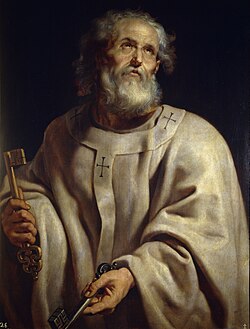
Doors play a strong symbolic role in the life of a Christian. It is symbolic of the entrance to the gates of heaven to which Peter had been given the keys. Often you will notice that the front doors of cathedrals are as ornate as the high altar, well, at least they were, as their symbolic use reminded those going to mass that they were entering into God’s house.

There is also the tradition of the Jubilee Year and the opening of the door at St. Peter’s in Rome. For more information look here.

But very intriguing are the doors in the place where we live. Dr. Paul Daum, who was one of my professors when I was in school to study set design, told the story of a set he had designed for which he received a lot of criticism. The play involved a Jewish family living in a Jewish town. “Notice the doors,” he told us. “You would never see these doors in a building built to accommodate people of the Jewish faith.”

The doors did not look any different than any doors that I had ever seen, but then he explained the symbolism to us. According to him, the long board down the center and the narrower cross board represents the cross of our Lord. The lower cross board which is much wider than the others, is an open Bible.

Even if it is not true, it should be.


A second common door in the places we live is called a “witch’s door”. Many barn doors and aluminum storm doors have this shape to them. Much of the door or at least the bottom half has an “X” through it. This is Saint Andrew’s cross. At one time St. Andrew was depended upon to protect people from witches. His cross was a marker of his presencee and intercession where people who wanted nothing to do with witches lived.


Note from Soutenus: As I added pictures and a couple more details to this post I realized that I really love doors.

Now, I have always had a thing for keys. . . I have made mobiles, musical instruments and collages with them. But doors! I did not realize it until just now.
They can be so expressive, beautiful and full of stories. Now with this new found knowledge from Adam's Ale I will appreciate them all the more.

My son and I worked on a post about Red Doors for his blog. I will have to include it over here at Catholic Notebook sometime soon.

This all makes me remember a wonderful and classic book called, Art as Experience, by John Dewey.
"For to perceive, a beholder must create his own experience. And his creation must include relations comparable to those which the original producer underwent....Without an act of recreation the object is not perceived as a work of art." (p. 54)


On the subject of art as experience, Dewey also said,
"The live being recurrently loses and reestablishes equilibrium with
his surroundings. The moment of passage from disturbance into
harmony is that of intensest life." (p. 17)
That brings art right into the realm of religion. Is it no wonder that great art not only can glorify God but can also speak to us in a way that nothing else can?
God has a great sense of humor. I am touched and filled with joy to know that. . . .a simple door can do that for me!


If you are interested in more of Dewey's aesthetic philosophy (particularly as it pertains to literature according to Dan Green ) check out: The Reading Experience
Go here for a photographer's view: Politics, Theory, Photography


Loved the Answers!


Mum2Twelve took the time to answer our class' questions.
We are sending out a big "Thank you" to her (and prayers for her daughter who has whooping cough)!

My 7th graders have composed some more comments for you. For better or for worse these are not edited -- so they are "as is" with no spell or grammar check.
Can you tell I have some ESL students, a class clown and a slight case of dyslexia going on here? :-)
In all seriousness, they are a fantastic group of kids and they meant it when they said they would pray for your daughter.

Saturday, November 24, 2007

Logan and the Calf

Logan is a 13 year-old boy who lives on a ranch in a very small town in Nebraska. Logan listens to Christian Radio station 89.3FM KSBJ which broadcasts from Houston, TX. Logan called the radio station distraught because he had to take down a calf. His words have wisdom beyond his years.

Trust God

A friend and I were discussing the end times last night. I found this and thought it an appropriate addition to our talk. . . . which was left completely unfinished and begs for further time. (no puns intended). This is for Randy
--> Randy, be sure and read these two articles, also: Glory of the Olives and, as Monty Python would say, "now for something completely different" (or at least from a different perspective): Rolling Stone magazine's article by James Lovelock - Prophet of Climate Change


***
Jesus (told) the disciples not to have fear but to face difficulties, misunderstandings and even persecutions with trust, persevering in faith in him.

"When you hear of wars and insurrections," the Lord says, "do not be terrified; for such things must happen first, but it will not immediately be the end" (Luke 21:9).

Mindful of this admonition of the Lord, the Church has from the very beginning lived in the prayerful expectation of the Lord's return, scrutinizing the signs of the times and putting the faithful on guard against recurring messianic movements that from time to time proclaim that the end of the world is imminent.

In reality, history must follow its course, which also brings human dramas and natural calamities with it. A plan of salvation that Christ has already carried out in his incarnation, death, and resurrection develops in history. The Church continues to proclaim and realize this mystery through preaching, the celebration of the sacraments and the witness of charity.

Dear brothers and sisters, let us welcome Christ's invitation to face daily events trusting in his providential love. Let us not be afraid of the future, even when it appears bleak to us, for the God of Jesus Christ, who took up history to open it up to its transcendent fulfillment, is its alpha and omega, the beginning and the end (cf. Revelation 1:8). He guarantees that in every little but genuine act of love the meaning of the whole universe is contained, and those who do not hesitate to lose their lives for him, will find them again in fullness (cf. Matthew 16:25).

May Mary, Mother of the Incarnate Word, accompany us on the earthly pilgrimage. We ask her to support the witness of all Christians, that it always rest on a solid and persevering faith.


SOURCE; VATICAN CITY, NOV. 18, 2007 (Zenit.org).- a translation of a part of the address Benedict XVI delivered on 11/18/07 before reciting the midday Angelus with several thousand people gathered in St. Peter's Square. [Translation by ZENIT]

Friday, November 23, 2007

The Solemnity of Christ the King

You can also find this over at: Catholic Mom of 10 Wonderful post!

Solemnity of Jesus Christ King of the Univerese
"The Solemnity of Christ the King is the last Sunday of the Liturgical Year.

Since the announcement of his birth, the Only-begotten Son of the Father, born of the Virgin Mary, was described as "king" in the Messianic sense, that is, heir to the throne of David in accordance with the Prophets' promise, for a Kingdom that would have no end.
(cf. Lk 1: 32-33).

The kingship of Christ remained completely hidden until he was 30 years old, years spent in an ordinary life in Nazareth. Then, during his public life, Jesus inaugurated the new Kingdom which "does not belong to this world" (Jn 18: 36), and finally,
with his death and Resurrection, he fully established it."

(Pope Benedict XVI, Nov. 25, 2005)


Blogging in the Bible - Psalm 144

I had not realized that blogging was mentioned in scripture. But hey! Look at the beginning of Psalm 144 :-)
"Blessed be the Lord, my rock, who trains my hands for battle, my fingers for war."


Psalms
Chapter 144
From the New American Bible @ nccbuscc.org

1
1 Of David. 2 Blessed be the LORD, my rock, who trains my hands for battle, my fingers for war;
2
My safe guard and my fortress, my stronghold, my deliverer, My shield, in whom I trust, who subdues peoples under me.
3
3 LORD, what are mortals that you notice them; human beings, that you take thought of them?
4
4 They are but a breath; their days are like a passing shadow.
5
5 LORD, incline your heavens and come; touch the mountains and make them smoke.
6
Flash forth lightning and scatter my foes; shoot your arrows and rout them.
7
Reach out your hand from on high; deliver me from the many waters; rescue me from the hands of foreign foes.
8
6 Their mouths speak untruth; their right hands are raised in lying oaths.
9
O God, a new song I will sing to you; on a ten-stringed lyre I will play for you.
10
You give victory to kings; you delivered David your servant. From the menacing sword
11
deliver me; rescue me from the hands of foreign foes. Their mouths speak untruth; their right hands are raised in lying oaths.
12
May our sons be like plants well nurtured from their youth, Our daughters, like carved columns, shapely as those of the temple.
13
May our barns be full with every kind of store. May our sheep increase by thousands, by tens of thousands in our fields; may our oxen be well fattened.
14
May there be no breach in the walls, no exile, no outcry in our streets.
15
Happy the people so blessed; happy the people whose God is the LORD.

Footnotes

1 [1] The psalm may reflect a ceremony in which the king, as leader of the army, asked God's help (Psalm 144:1-8). In Psalm 144:9 the poem shifts abruptly from pleading to thanksgiving, and (except for Psalm 144:11) shifts again to prayer for the people. The first section (Psalm 144:1-2) is a prayer of thanks for victory; the second (Psalm 144:3-7a), a humble acknowledgment of human nothingness and a supplication that God show forth saving power; the third (Psalm 144:9-11), a promise of future thanksgiving; the fourth (Psalm 144:12-15), a wish for prosperity and peace. A prayer for deliverance from treacherous foes serves as a refrain after the second and third sections (Psalm 144:7b-8, 11). Except for its final section, the psalm is made up almost entirely of verses from other psalms.

2 [1-2] Composed of phrases from Psalm 18:3, 35, 47-48.

3 [3] Similar to Psalm 8:5.

4 [4] Composed of phrases from Psalm 39:6; 102:12.

5 [5-7] Adapted in large part from Psalm 18:10, 15, 17; 104:32.

6 [8b,11b] Their right hands are raised in lying oaths: the psalmist's enemies give false testimony.

Thursday, November 22, 2007

Be Still & Know That I Am God

There is a wonderful blog I like to visit called Civilization of Love. Here is an excerpt that was particularly poignant to me. (I have edited and added graphics - as usual!)

When we fall into desperation or desolation because of what happens in our lives or because of the suffering of others that we see around us, we need to remind ourselves of what Psalm 46 says: “Be still and know that I am God” (v. 11) and that should bring us comfort. God’s ways are greater than ours and beyond our imagination–as St. Paul says, we cannot grasp yet what “God has prepared for those who love him” (1 Cor 2:9) and we need to remain a hopeful people. We cannot lose faith.

Our human condition always tempts us to put God in clear and distinct categories and this passage reminds us that we cannot do that when thinking about God. What we find so puzzling is that no one says “I am who am,” but rather we are something or someone: we are men, or women, or children, or adults, or siblings, or spouses, or small, or tall, or mothers, or fathers, or doctors, or farmers… you name it! But God is infinite and limitless. Our human categories do not apply to Him.

"But," said Moses to God, "when I go to the Israelites and say to them, ‘The God of your fathers has sent me to you,’ if they ask me, ‘What is his name?’ what am I to tell them?’
God replied, ‘I am who am.’ Then he added, ‘This is what you shall tell the Israelites: I AM sent me to you. ” (Ex 3:13-14)
When we meditate on the greatness of God and His essence, as Christians, we cannot forget also the nearness of God. The invisible God in the Old Testament became man for us and has invited
us to the Divine Fellowship of God and that has to always bring us hope and comfort.


Happy Thanksgiving


MENU:
Roasted Turkey and Gravy
Homemade Mashed Potatoes
Fresh Cranberry Sauce
Stuffing with toasted almonds and apples (new recipe)
Peas
Homemade Bread
Apple Pie
Pizzelles

Read Abraham Lincoln's Thanksgiving Proclamation of 1863 here

Wednesday, November 21, 2007

Preparing for Advent

Now is the hour for us to rise from sleep. Rom 13:11

The kingdom of God is at hand . Luke 21:31

The following is an Advent sermon based upon Rom 13:11-14 and Luke 21:25-33, with a thumbnail sketch of the Church’s liturgical year. (Please note that this sermon was preached in 1917 and reflects the liturgy/liturgical year of that time.)

Soon we will be beginning a new ecclesiastical year. As you are aware, the Church calender is different in many respects for that of the state. The latter extends from the beginning of January to the end of December-a purely mechanical arrangement. But, as in everything she does, the Church has a deep and beautiful meaning in her own system. In her calender we see the whole life of our blessed saviour. All her feasts and fasts are arranged in such a way that they represent in graphic form the history of mankind-the fall of Adam, the promise of a redeemer and its fulfilment in Jesus Christ, together with the principle events in the life, sufferings, and death of our Divine Master.

With this idea in view she begins her year with the season of Advent (which means “coming”) , four weeks before Christmas. This period represents the thousands of years which intervened between the promise of the Redeemer, made to our first parents after their fall,and the actual coming of our Lord at Christmas. During that long period all the holy patriarchs and prophets, and even the heathen world, longed and prayed for the coming of the Just One and ardently desired to see the Blessed Day.

  • Then comes Christmas, that season of joy, peace, and good will, which speaks so eloquently of the love and goodness of God towards men.

  • Immediately after comes the Epiphany (which means “manifestation”), during which we commemorate the coming of Our Saviour to the Gentiles, represented by the three Magi, or wise kings, who, led by the star of Bethlehem, came from the East to adore Him and present their offerings of gold, frankincense, and myrrh.
  • The holy season of Lent is designed to prepare us for great feast of Easter. This season begins on Ash Wednesday; and, as it is a time not only of fasting and prayer but also of serious and solemn thought and self-examination, the Church begins early to remind us of the spirit in which we should enter upon it by putting on her penitential garb three weeks before, that is on Septuagesima Sunday-seventy days before Easter.
  • The next great feast in the Church’s calender is Easter Sunday, on which is celebrated Our Lords glorious resurrection from the dead and His triumphant victory over death and hell. But our holy mother the Church does not allow us to forget that Christ entered into his glory only after suffering and death. “Ought not the Christ to have suffered these things, and so enter into his glory?” (Lk 24:26). And so she prepares us for the proper celebration of that grand festival by making us imitate, as far as we can, Christ’s won preparation for it. He began his public life by fasting for forty days in the desert.
  • Having, then, by the worthy reception of the sacraments at Easter, risen to a new life with Christ, we celebrate with special fervor the coming of the Holy Spirit at Pentecost (fifty days after Easter).
On that and on the following Sundays the Church continues to teach the many lessons which the Holy Spirit of Truth impressed upon the minds of the apostles. One of the principle ways in which she accomplishes this is by presenting for our serious reflection each Sunday and feast day two specially selected extracts from the Holy Scriptures. The first of these is called the “epistle” because it is generally taken from the epistles, or letters, of St Paul or some other apostle who wrote under inspiration of the Holy Spirit to the different churches of the first Christians.

Extracts from these letters were usually read in public by the early Christians before the celebration of the Divine Mysteries, after the custom of the Jews, who always began the Sabbath service in the synagogues by reading of extracts from Moses and the Prophets. The second portion is taken from one or other of the accounts of the Life of Our Lord as written by the evangelists, Matthew, Mark, Luke, and John, and hence called Gospel, or Good News.

The present arrangement of the Epistles and Gospels was made by St Jerome, at the command of Pope Damasus, in the fourth century (Jerome did arrange the lectionary, but it underwent numerous changes down through the centuries. To speak of him as the arranger of the lectionary in use in 1917 is therefore incorrect).

It is formed on a fixed and definite plan and has a definite spiritual significance, provision being made for each season, feast, and fast of the year by the presentation of appropriate passages from Holy Scripture, “in the selection and collocation of which,” according to even non-Catholic writers, “a richness of variety and an exquisite delicacy of religious and aesthetic instinct has been strikingly shown.”

This applies not merely to the individual extracts, as appropriate to each feast and season, but also to the beautiful sequence of their teaching, the whole collection forming together a consecutive series, each Epistle and Gospel being closely connected not only with each other but with those that precede and follow, in their order.

  • The Epistle is read before the Gospel, as well to follow the ancient custom as to commemorate the practice of Our Lord Himself, who was accustomed to send some of His disciples before Him to those places He was about to visit.
  • It always contains some important lesson appropriate to the season of the year, the event or feast celebrated, or all taken together.
  • This lesson is announced by the Sacred Writer, as it were, in theory, and is followed by its confirmation in practice by some account in the Gospel of a work or miracle of the Master Himself, and sometimes by His very own words.
  • These selections follow in consecutive order the various seasons, feasts, and fasts of the ecclesiastical year, each with its own special warning, pleading, encouragement, or exhortation, the one bearing out and complimenting the other; all combining to fill our hearts and minds with the teaching and spirit of the Master’s Word.

We should, therefore, make a careful study of each holy extract every Sunday and feast day, listening with attention and devotion to the explanation given by the priest; for though St Paul says, “what things soever were written, were written for our learning: that through the patience and comfort of the Scriptures we might have hope" (Rom 15:4); and though, according to the same great apostle, “all Scripture inspired of God is profitable" (2 Tim 3:16), yet we must remember that according to the Holy Scripture itself there are contained therein “certain things hard to understand, which the unlearned and unstable wrest…to their own destruction” (2 Pet 3:16).

It is not enough, then, to read them or hear them read. We must, as far as we can, seek an intelligent appreciation of their meaning. How familiar to every good Catholic ought to be the many precious lessons contained in the Epistles and Gospels in their prayer-book, and yet how little good they have derived from them, and how little they know about them, although they have been reading them all their lives!

Let us, therefore, on the first Sunday of Advent, begin the New Year with a sincere desire to enter into the spirit of Holy Church, saying with the Prophet: “But as for me and my house, we will serve the Lord" (Josh 24:15).

It is to this resolve that she exhorts us in the Epsitle and Gospel of today. She tells us in the Gospel, in the very words of our Divine Master Himself, of the terrors of the Last Day, when “there will be signs in the sun, and in the moon, and in the stars; and upon the earth distress of nations by reason of the confusion of the raoring sea and of the waves, men withering away for fear and expectation of what shall come upon the whole earth.”

And she reminds us of the General Judgment which follows, when we “shall see the Son of Man coming in a cloud, with great power and majesty,” to judge the living and the dead, for she is convinced of the value of that salutary advice of Holy Scripture: “In all thy works remember thy last end and thou shall never sin” (Eccl 7:40).

“That day of wrath, that dreadful day” (Zeph 1:15) may now seem to us to be far distant; but not so, for it is at hand for each of us. “The Kingdom of God is at hand” and “our generation shall not pass until all these things be done,” “till all things be fulfilled.” Nay, it is “near, even at the door’ (Mt 24:33), for, as far as we are concerned, our fate on that dreadful day will be decided by our actions now. “As a man lives so shall he die,” and “in what place soever a tree shall fall, there it shall be” (Eccl 9:3). And we shall die much sooner than we expect, for Christ has warned us that “the day of the Lord shall so come, as a thief in the night" (1 Thess 5:2), and according to St Peter, “one day with the Lord is a thousand years, and a thousand year as one day” (2 Pet 3:8), who concludes by asking: “What manner of people, then, ought you to be in holy conversation and godliness?” (3:11)

The answer is clearly given in every word of the Epistle of the first Sunday of Advent, which we should well weigh and consider: “It is now the hour for us to rise from sleep,” it says. We have indeed been asleep in the past, unmindful of all that concerns us. Let us now awake, for “the night is past, the day is at hand.”

Instead of waiting for that terrible day, when the “trumpet shall sound and the dead rise again” (1 Cor 15:52), and the voice of the Angel shall be heard crying out that awful summons, “Arise, ye dead, and come to judgment,” let the voice of Holy Church ring in our ears and awake us to the true sense of our position: “Rise, you who sleep, rise from the dead: and Christ shall enlighten you” (Eph 5:14).

Let us enter into her spirit and strive to be animated with her sentiments. We are to prepare during Advent for he coming of Our Lord at Christmas. The prophets of old longed for His coming. Drop down dew, ye heavens, from above, and let the crowds rain the Just; let the earth be opened and bud forth a saviour’ (Is 45:8). But the privilege was denied to them. We are more fortunate than they, for, like holy Simeon, “our eyes have seen His salvation” (Lk 2:30). We serve Him with love. He has called us to be children of His Kingdom, members of His Holy Church, having “made us worthy to be partakes of the lot of the saints in light,” and “has delivered us from the power of darkness and has transferred us into the Kingdom of the Son of His love" (Col 1:12-13).

Let us, then, “cast of the works of darkness” of our sinful habits and “put on the armor of light” of true repentance and bright virtue, so that instead of being afraid to meet the Just Judge amid the awful surroundings of the Last Day, we can joyfully look forward to meeting Him as Our Saviour at Christmas, as gentle, kind, and loving as the Divine Infant in the stable at Bethlehem.

(From THE MASTER’S WORD IN THE EPISTLES AND GOSPELS by Father Thomas Flynn)

sources: The Divine Lamp

Storybook of Saints & Animals, by OU student Brianne L.Webb

Thursday, November 15, 2007

Mightily & Sweetly

Hat Tip to NunBlog where I found this post. It is almost verbatim. Sister's blog is insightful, inspiration and just a nice place to visit! Go and see what I mean!

Oh, and btw -- she is a singing nun!
Christmas album!

Fortiter et Suaviter
" Fortiter et suaviter" are words from the Old Testament, and they are in today's first reading from the book of Wisdom. The Latin words are usually translated "mightily and sweetly." In context, the Scripture is saying that God's wisdom "reaches mightily from one end [of the universe] to the other, and orders all things well." Only the Latin says "suaviter," softening the brutal edge we might assign to the word "might."
Think of this in the context of the exclamation that the townspeople made after one of Jesus' miracles: "Everything he does is beautiful!"
It is fitting, it is apt, it is lovely: suaviter.

In this week before Thanksgiving, "fortiter et suaviter" can also be a principle for discernment. This is how God acts: not with brusque power, but with tender and uncompromising vision.

The saints, especially St. John of the Cross, tell us that we need to have our attention very finely tuned in order to discern God's doings, because he does them "suaviter." That is why it is such a good idea to make a review of the day before retiring at night, creating space for us to begin to notice those subtle "movements" (as St. Ignatius called them) that indicate that the Lord is passing by. We may be amazed at how much we've been missing!

Catholic Movements


The Knights of Columbus
The Knights was formed to render financial aid to members and their families. Mutual aid and assistance are offered to sick, disabled and needy members and their families. Social and intellectual fellowship is promoted among members and their families through educational, charitable, religious, social welfare, war relief and public relief works.

The history of the Order shows how the foresight of Father Michael J. McGivney, whose cause for sainthood is being investigated by the Vatican, brought about what has become the world's foremost Catholic fraternal benefit society. The Order has helped families obtain economic security and stability through its life insurance, annuity and long-term care programs, and has contributed time and energy worldwide to service in communities.

The Knights of Columbus has grown from several members in one council to more than 13,000 councils and 1.7 million members throughout the United States, Canada, the Philippines, Mexico, Poland, the Dominican Republic, Puerto Rico, Panama, the Bahamas, the Virgin Islands, Guatemala, Guam and Saipan.


Legion of Mary
WHAT IS IT?
The Legion of Mary is the largest apostolic organization of lay people in the Catholic Church, with well over 3 million active members in almost every country of the world. It has been active in the United States since 1931, has been approved by the last 6 Popes, and was endorsed by the Second Vatican Council. The main purpose of the Legion of Mary is to give glory to God through the sanctification of its members.

WHAT DOES IT DO?
Members become instruments of the Holy Spirit through a balanced program of prayer and service. Works include door-to-door evangelization, parishioner visitation, prison ministry, visitation of the sick or aged, crowd contact, religious education, visiting the newly baptized, Pilgrim Virgin Statue rotations, and meeting the other spiritual needs of the parish community. Legionaries are under the guidance of a spiritual director named by the pastor. The Legion is, in essence, an extension of the heart and hands of the pastor.

HOW DOES IT WORK?
Members meet once a week for prayer, planning and discussion in a family setting. Then they do two hours of definite work each week in pairs and under the guidance of their spiritual director.


Life Teen
What started out as a youth group at St. Timothy's in Mesa, Arizona, has grown into the most prolific youth ministry in the Catholic Church. Every Sunday, 120,000 teenagers attend a Life Teen Mass. Our 1080 programs stretch around the globe into twenty countries.
Life Teen is an international Catholic movement that serves the Church by providing resources and faith experiences that help lead teens closer to Christ. This is accomplished through a vibrant Eucharistic spirituality and by creating widespread opportunities for teens to grow in their faith.


Marian Catechist
We are centered on the love of the Holy Eucharist, and marked by both a strong devotion to the Blessed Virgin Mary, Mother of God, and an unswerving loyalty to the Holy Father as Successor of Saint Peter in the office of Roman Pontiff.We work in the apostolate of catechesis, handing on to others the gift of Christ’s truth and love found in the Catholic Faith. We are absolutely faithful to the Magisterium.

Opus Dei
Opus Dei is a Catholic institution founded by Saint Josemaría Escrivá.
Its mission is (
Finding God in daily life) to spread the message that work and the circumstances of everyday life are occasions for growing closer to God, for serving others, and for improving society.

Communion and Liberation
is an ecclesial movemnt whose purpose is the education to Christian maturity of its adherents and collaboration in the mission of the Church in all aspheres of contemporary life. It began in Italy in 1954 by Fr. Luigi Giussani and a founding principle is that the conviction that the Christian event, lived in communion, is the foundation of the authentic liberation of man. Communion and Liberation is today present in about 70 countries. The basic instrument for the formation of adherents is weekly catechesis called School of Community.

Regnum Christi
"This is what Regnum Christi precisely is: a movement of apostolate, a movement of evangelization, a movement in which each member wants to take seriously and responsibly the great missionary mandate Jesus Christ gave to all those who profess to be his followers. The Legionaries of Christ and the members of Regnum Christi wish to go into the entire world and preach the Gospel fearlessly, sustained by the almighty power of God, in the words of our Lord Jesus Christ, who told us: I will be with you until the end of time." (Fr. Marcial Maciel, L.C., May 24, 1997)

Regnum Christi is an apostolic movement at the service of mankind and the Church. Founded by Fr. Marcial Maciel in 1959, the Regnum Christi Movement includes lay men and women, as well as deacons and priests. It contributes to spreading Christ´s message to humanity by undertaking personal, organized apostolic activity.
Regnum Christi promotes among its members a deep sense of mission and ecclesial solidarity. As a dynamic organization, it encourages them to show initiative and reminds them of their responsibility, rooted in baptism, to make faith the driving force of their daily lives in their personal, family, parochial, profession and social environments. One of the particular characteristics of the Regnum Christi Movement is its bond with the Legionaries of Christ. The founder had the inspiration to found a religious congregation as part of a broader movement encompassing laity and diocesan clergy. The Legion´s governmental structure is that prescribed by Canon Law for religious congregations.

Courage Apostolate
Courage, an apostolate of the Roman Catholic Church, ministers to those with same-sex attractions and their loved ones.

We also have an outreach called
Encourage which ministers to relatives and friends of persons with same-sex attractions.


Wednesday, November 14, 2007

What Kind of Mini-World Are You Creating?


A young mother was having one of the worst days of her life. Her husband lost his job the water heater exploded and the postman brought a stack of bills she couldn't pay. Her hair was a mess, and she felt fat and ugly. She was almost at the breaking point as she lifted her little one-year-old into his highchair, leaned her head against the tray and began to cry. Without a murmur, the little one took the pacifier out of his own mouth ... and gently placed it in hers!


Compassion and Generosity: He didn't know the words, but his heart knew the need. And he gave what he had! In so many ways, we are the makers of one another's worlds. Minute by minute, we create the mini-world we live in together. And most of the time, we haven't a clue as to how huge is our power to bring joy or sorrow, healing or injury to one another.
For example, together, at this very moment, we are creating a short-lived little world. We do that in countless little ways: By the way we come in and the way we leave, the way we respond to each other and the way we pray together, the way we make room for one another.
From the moment we open our eyes in the morning till we close them at night, we have the power to create and the power to destroy We have the power to give our gifts -- large and small -- and the power to withhold them.
Most of us will rarely be called upon to make a truly huge sacrifice for another. But all of us will encounter thousands of people whose lives we can make a little richer, a little happier because we were there and because we gave what we had -- just like that little tyke who gave away his pacifier.
At every moment, each of us has something to give, something that's needed. Will we give it? We simply must, because giving our gifts is the only way we'll ever find happiness. It is a beautiful way to grow into the image and likeness of God.

Dt 30:10-14 / Col 1:15-20 / Lk 10:25-37
sources:

Monday, November 12, 2007

Well then, it must be safe!


"Just because it is on a store shelf doesn't make it safe."

I say that at least once a week . . . let me elaborate on that, "Just because it is advertised does not make it safe."

This ad is a real vintage ad. What will our grandchildren be looking at and shaking their heads at in dismay?
Viagra, Tylenol, Aspartame, Lindane, Q-15, Chicken Pox vaccine, Lipitor, Hormones in milk, Formula for babies, Lysol . . .

Don't expect Uncle Sam to be watching your back! Remember that the U.S. government does not require manufacturers to list the ingredients on the label of products that are used for family, household or personal care -- Yes, that's right; they do not even have to tell us what is them.
AND -- products that KILL up to 50% of lab animals by inhalation, ingestion or absorption can still receive the federal regulatory label of "non-toxic."

Friday, November 9, 2007

Cultural Immersion

I have been working on a post about multiculturalism gone awry. As I am finishing that post I am reminded of a positive "multicultural experience." I remember a cultural immersion activity on the High School level. (This was public school many years ago in the North East)
High School students chose a cultural experience that was completely foreign to them. It had to be approved by both teacher and parents.
The idea was for kids to chose an activity, ceremony, gathering or event that would immerse them into a totally new culture. We required that students learn the basic etiquette of their chosen culture so that they were respectful. Often a students' choice would require that they be invited or escorted. Teachers worked with parents to make sure that every cultural immersion activity was safe, acceptable to the parent and that the kids had adequate supervision. It was quite an undertaking, as you can imagine.
We wanted the kids to feel a bit of culture shock. We wanted them to experience being in the minority. We talked about this before their excursions to remind them that when some people feel uncomfortable their internal defense mechanisms kick in. We tried to prepare the kids as best we could and we stressed that they would be guests and to act accordingly.

The students' ideas of what would be EXTREMELY new and different varied immensely. Kids who had traveled, were well read for their age or who had racially mixed families took many of their everyday experiences, that others thought to be exotic, for granted.

It was fascinating to watch how it all came together to help students see that "normal" is usually that with which one is familiar. "Normal" is not defined as right or best or good.
This exercise really helps one understand how important it is to look to the Church for guidance in what is right and wrong. (Not TV, friends, movies or popular culture).

As I mentioned before, the students' ideas of what would be EXTREMELY new and different varied immensely.
Some examples of students' cultural immersion choices were:
Attending Mass
Attending a Spanish Mass
Going to services at a synagogue
Attending a Bar Mitvah
Attending a Raza Unida gathering (invited and escorted, of course)
Going to an exclusive Country Club restaurant
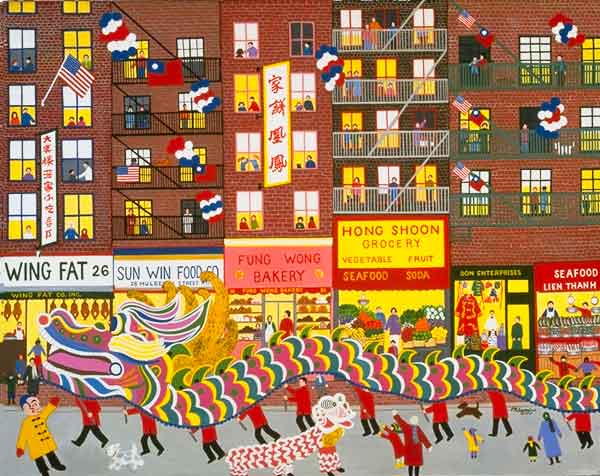
Going to China Town in NY and trying many different foods
Attending a Quincinero Mass and party
Attending a Black Student Union meeting (a Caucasian student, of course)
Going to a nursing home and helping on the hospital wing
Helping with a camp for the mentally retarded
Taking the train to downtown Philadelphia (escorted, of course)
Being a teacher's helper in a deaf class (where all the kids signed)
Attending an evangelical Baptist church service
Going to a Vietnamese Mass
Helping at a homeless shelter soup kitchen
One boy took Home Ec for a month
2 Girls took Shop for a semester

The results of this immersion exercise never cease to amaze me.
What I think I like best is that kids who have never been "in the minority" get such a sudden and overwhelming feeling of what that can be like.
Our discussions after the cultural immersions were wonderful. This was, of course, KEY in making the experiences work in a positive way for everyone!
Some of our discussion questions were:
What did it feet like to be in a situation that that was completely new?
Did you feel welcomed?
Did you feel people were judging you?
Did you think that any of your cultural faux pas were regarded as rude?
Are you usually sensitive to others who are in an uncomfortable situation?
What have you done to help someone who might feel "out of place"?
Do you think, in light of your cultural immersion," that you will be any more sensitive to another who is in an uncomfortable situation?
What emotions did you experience and why? (we tried to help students to take ownership of their own emotions here)
Did you remember that you were not "trapped" that you could leave (respectfully) at anytime?
How does this affect your outlook towards those who are in the minority where you are in the majority?
Did you enjoy your cultural immersion? Why or why not?

Monday, November 5, 2007

Kathy Eyerly -30 years ago


The longer I teach the more I meet my childhood friends over and over again. Never exactly the same - but there is often enough similarity in spirit, demeanor and personality to take me back 30 years. I remember thinking, when I was a child, that being able to remember "30 years ago" would be so cool. You know what? It is.

But I do miss some of my friends.

I had a dear girlfriend when I was in about the 3rd grade. She and I remained friends even after she moved, during our Jr. High years, to Illinois (remember when 7th through 9th grade was called Jr High?) I remember my Mom telling me back then that when she was little (30 years before Kathy Eyerly) her schools were usually 1st through 8th and then High School was 9th through 12th. (My Mom moved 14 times in 12 years) My dad went to a Catholic school that was 1st through 12 and the farm kids took off for planting and harvesting.

Anyway, my friend, Kathy Eyerly, died soon after she turned 21 -- of a brain hemorrhage (aneurysm). It was sudden, as you can imagine. She left behind a young daughter. Ironic, I think, that Kathy was the one friend who stayed at the funeral home with me when I was 11 and my dad died. She seemed unafraid of his body, of the strange smells of a funeral parlor, of the somber adults, of death in general. She seemed to have to no uneasiness with me either. I was as likely to break into sobs as easily as I might retreat into silence. She even had me giggling because I was so shaky that I could not make it across the room without spilling the water out of the little dixie cups the funeral home provided for the bereaved. I remember trying to get a cup of water to my Mom who was imprisoned behind a seemingly impenetrable and endless line of mourners hugging her, crying on her, leaning on her. I remember telling Kathy, who was trying to maneuver her way with me across the huge room, " just follow the trail of my drips." It was a moment of smiles for us. No where else would dripping water across a floor EVER be acceptable. But I could not help it -- I could not physically get across the room without spilling my drips of water as profusely as tears flowed. It was as if EVERYONE and EVERYTHING was crying. Kathy giggled. I giggled and we moved through the room ducking under grown-up's elbows and winding gracefully through the crowd as only 11 year old girls can.

I see Kathy in many of the vivacious, earnest, rosy cheeked girls I teach here at my beloved Catholic school. I went to public school. It is somewhat of a miracle that Kathy went to public school. She came from a large, Irish Catholic family.

All during my childhood I secretly wanted to go to Catholic school. Their lines were so civilized. They didn't jostle and taunt each other loudly at the bus stops. I was willing to bet none of them ever had a fellow bus rider bring a switch blade to school. By the time I was in 7th grade I longed for my idealized version of a peaceful school bus ride with no aroma of marijuana lingering in the stale bus.
I know Catholic kids weren't perfect. It is just that they seemed nicer as a group.

Somehow, Kathy and I ended up in the same school. I was grateful for her. I miss her. I wish I could share with her my joy at finding my way home to Rome and my love of teaching in a Catholic school.
Somehow, I am sure she knows. In the meantime I am reminded to pray for her each time I "see a bit of her" in so many of the students I teach.
Blog Widget by LinkWithin